From “rounded shoulders” to “square shoulders”: The magic of posture correctors for visual proportions

Have you ever had this experience: trying on an off-the-shoulder top or a sundress in the fitting room, even though you weigh less than 100 pounds, you always look “broad-shouldered and thick-waisted” in the mirror? You might blame it on eating too much lately or the clothes not fitting well. But as an observer who has long focused on human aesthetics and body management, I want to tell you a truth that is often overlooked:
The culprit that ruins your clothes might not be fat, but rather the arrangement of your bones.
There’s an unwritten secret in the fashion world: “Posture is like plastic surgery.” Especially for the lines of the neck and shoulders, even a slight realignment of the bones can create a stunning visual transformation. Today, we won’t delve into dry rehabilitation medicine but rather discuss from an aesthetic reshaping perspective how Posture Corrector can be your secret weapon for achieving “right-angled shoulders” and a swan-like neck and how it can instantly make you look five pounds lighter by altering the body’s “visual geometry.”
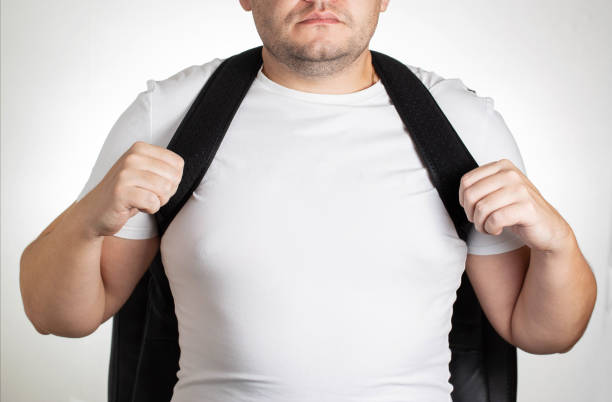
Visual deception: Why do rounded shoulders make your neck look shorter?
To understand the urgency of improving rounded shoulders, we must first understand what exactly “rounded shoulders” do visually.
Imagine your upper body as a delicate clothes hanger. When you spend long hours hunched over a desk, looking down at your phone, your pectoral muscles tighten and shorten, pulling your shoulders inward and forward. This action directly leads to two visual disasters:
Collarbone “disappears”: The collarbone is originally the sexiest line of the upper body. When the shoulders are rounded, the collarbone will sink into a V-shaped depression and lose its original straight and smooth beauty.
Trapezius muscle “bulge”: When the shoulders hunch forward, your upper trapezius muscle must remain constantly tense and congested to support the weight of your head. Over time, this can form two “small hills” that visually shorten your neck.
This is why many people, even if they are not overweight, appear to have no thick neck or back.
At this point, the Posture Corrector‘s role goes beyond mere correction; it actually restores visual proportions. By physically retracting and depressing the scapula, it forces your shoulders back to their correct neutral position. Once the shoulders are open, the two “trapezius muscle hills” that bulge due to tension are physically flattened, instantly revealing the hidden neckline.
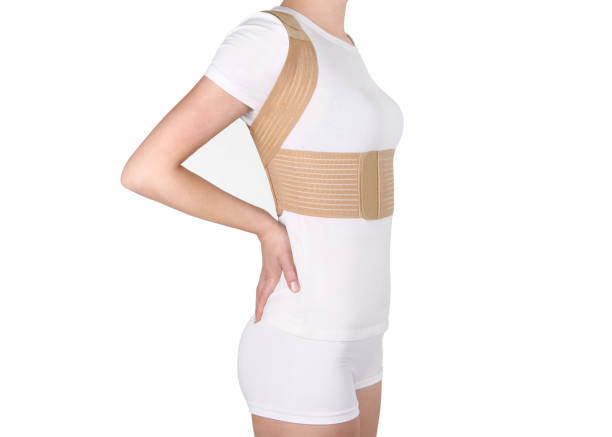
A physiological shortcut to achieving “right-angled shoulders”
Everyone on social media is searching for “how to get 90-degree shoulders,” and all sorts of swan arm tutorials are popping up everywhere. Exercise is certainly important, but if you exercise with incorrect posture, you’ll often end up looking bulky instead.
This is the perfect time for Posture Corrector to intervene—not only as support, but also as a training tool for “proprioception.”
1. Deactivating the trapezius muscle compensation.
The biggest mistake many people make when trying to develop square shoulders is habitually shrugging their shoulders while exercising. When you wear a posture corrector, especially those with an underarm crisscross design or back support bars, it will provide resistance when you try to shrug.
This resistance is an extremely important feedback signal. It constantly reminds your brain: “Lower your shoulders, engage your back muscles.” From a physiological perspective, the correct use of the term “posture corrector shortens trapezius” actually means that it helps shorten overstretched back muscle groups while simultaneously relaxing them, thus visually eliminating the appearance of swelling in the trapezius muscles. It gives your upper trapezius muscles a chance to “rest,” thus making them appear thinner.
2. Reshaping the V-Shape of the Back
The aesthetic appeal of square shoulders largely depends on the uprightness of the back. When you wear the posture corrector, it assists in the contraction of your rhomboid and lower trapezius muscles. This mechanical assistance makes it easier to maintain an open chest position when walking or standing.
This isn’t just about the shoulders; it’s also about the waistline. When the thoracic spine is straight and the ribcage is open, your entire torso will be lengthened. According to the principles of human visual proportion, this torso lengthening creates a natural “visually slimmer waist” effect. This is the most advanced visual height posture technique—no need for height-increasing insoles; just by straightening your previously hunched spine, you can visually gain 2-3 centimeters in height and achieve a more slender waistline.
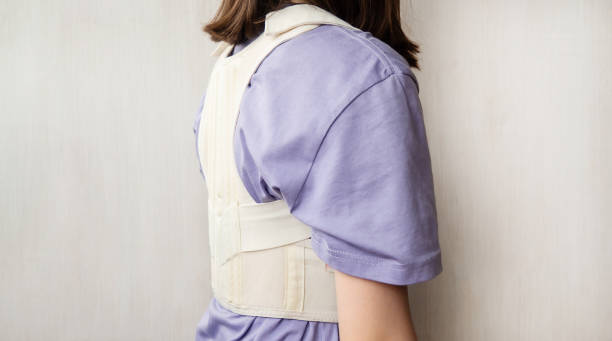
Actively sculpt: Don’t let it become your “crutch.”
As a professional in the industry, I must point out a common pitfall: many people treat posture correctors as an “exoskeleton” to maintain posture, believing that wearing them makes them look upright, but taking them off makes them revert to their original shape.
To truly achieve a permanent, model-like physique, you need to treat the posture corrector as a fitness device, not just a brace.
Recommended “body sculpting” process:
The golden 30 minutes daily: Don’t wear it all day. Choose to wear it for 30 minutes in the morning or before exercise.
Combined with standing against a wall: Wearing the brace, keep the back of your head, shoulder blades, hips, and heels pressed against the wall. The brace will help you more easily find the feeling of muscle engagement.
Post-removal maintenance: After removing the brace, try to maintain the same posture using the muscle memory you just had. This is the crucial moment for establishing connections between muscles and nerves.
This is like training wheels on a bicycle; their purpose is to eventually teach you to maintain your balance without them.
in conclusion,
In this era where appearance and physique matter, the value of the posture corrector extends far beyond medical rehabilitation. It is a key to achieving superior body proportions.
The leap from “rounded shoulders” to “right-angled shoulders” is essentially a return to control over one’s body. When you regain the feeling of relaxed shoulders and an open chest through the Posture Corrector, you gain not only a visually longer neck and a slimmer back, but also an uplifting aura.
Remember, the most expensive garment is your upright posture.
FAQ (Frequently Asked Questions)
Q1: Will wearing a posture corrector for a long time really make my trapezius muscles smaller?
To be precise, it doesn’t directly “eliminate” the muscle, but it addresses the root cause of enlarged trapezius muscles. Many people’s trapezius muscles appear large because long-term rounded shoulders cause the muscles to be in a state of tension and congestion. By using a posture corrector to help correct posture, the shoulders are lowered, allowing the upper trapezius muscles to relax and lengthen, making them appear flatter and slimmer. This achieves the effect of “Posture Corrector shortens trapezius“ “” (visually shortening/weakening the trapezius muscles).
Q2: How long do I need to wear it every day to improve rounded shoulders?
Haste makes waste. For those seeking to improve rounded shoulders, we recommend following the principle of “small amounts, multiple times.” Start by wearing it for 15-30 minutes daily, primarily to train muscle memory. Overuse can lead to muscle dependence, which is detrimental to sculpting muscle definition. The key is to consciously engage your core and actively cooperate with the pull of the brace while wearing it.
Q3: Is this visual height-increasing effect permanent?
Visual height posture techniques depend on your muscle habits. Initially, the effects may disappear as muscles tire after removing the corrector. However, if you consistently combine wearing the posture corrector with back strength training, this upright posture will become internalized as your deep spinal stabilizing muscles strengthen, at which point you will achieve permanent visual height increase and posture improvement.