Sleep your way to better posture: Can a posture corrector be used for nighttime sleep?

We’ve all had this thought: since improving our physique is so difficult, why not take a “shortcut” by using those 8 hours of sleep each day?
Imagine you’ve finished a long day of desk work, your neck stiff and your back aching. Looking at the posture corrector by your bedside, you might think, “If I wear this to bed, will it unconsciously correct my hunchback and give me a straight posture when I wake up the next day?”
This is a very tempting idea, like learning a foreign language while you sleep. However, as an observer who has worked in this industry for many years, I must press the pause button here. While we always hope to achieve twice the results with half the effort in the pursuit of nighttime posture management, using corrective devices designed for daytime use during sleep may not only be ineffective but could even be counterproductive.
Today, we’ll delve into the underlying physiological logic to see why your spine needs “support” rather than “force” at night.
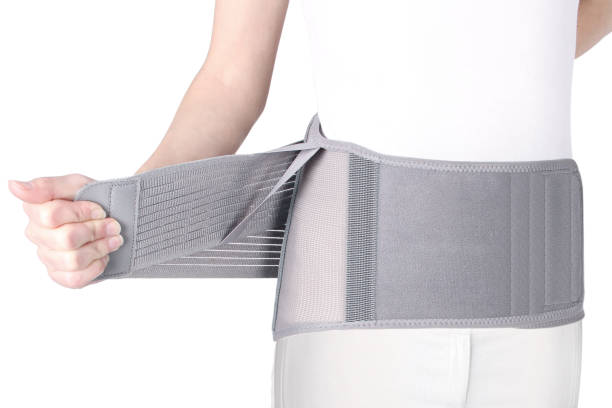
Day and Night: Two Completely Different “Operating Systems” for the Body
To understand why you shouldn’t wear a posture corrector to sleep, you first need to understand how these products work and how they conflict with our sleep physiology.
Active feedback vs. loss of muscle tone
A high-quality posture corrector’s core design logic is not simply “binding,” but rather providing “proprioceptive feedback.” When your shoulders involuntarily sag forward, the corrector creates slight resistance or a pulling sensation, reminding your brain, “Hey, tighten your back muscles and straighten your chest.” This is an active training process that relies on your conscious muscle control.
However, when we enter sleep, especially REM (rapid eye movement) sleep, the body activates a protective mechanism—muscle atonia. Except for the muscles that control the eyes and breathing, most of your skeletal muscles are in a state of extreme relaxation or even “paralysis.”
a posture corrector at this time:
Ineffective feedback: Your muscles have “shut down,” and your brain cannot receive or respond to the “straighten” signal from the corrector.
Passive stretching: Your body no longer maintains posture through muscle strength but instead hangs its weight entirely on the brace. This is like hanging a heavy backpack on a clothes hanger; all the pressure is concentrated on the contact points and ligaments, not the muscles.
Not all “braces” are created equal.
Here, it’s important to distinguish between two technical concepts. In the medical field, there are indeed scoliosis braces worn at night (such as the Milwaukee brace or the Boston brace). However, these are rigid, custom-made medical devices designed to prevent the worsening of skeletal deformities. The consumer-grade posture corrector we’re discussing, on the other hand, is typically a soft, flexible assistive device designed to aid muscle training, not to forcibly reshape the bones. Confusing these two is the root cause of many users’ misuse.
Invisible risks: The physiological costs of forced wearing
If you insist on trying the safety of sleeping with a posture corrector, what awaits you the next morning may not be an upright posture, but rather numbness in your arms and more severe soreness.
1. Circulatory obstruction and nerve compression
During sleep, our blood pressure naturally drops and blood flow slows down. Posture correctors, designed to provide correction, typically have straps under the armpits, shoulders, and chest. During the day, your body is active, and slight pressure is tolerable. However, at night, when you remain in one position for extended periods, these straps can easily become tourniquets.
Local ischemia: Continuous pressure can hinder blood return, leading to swelling or hypoxia in the extremities.
Brachial plexus injury: The armpit is a densely packed area of nerves. Prolonged nighttime compression can lead to symptoms similar to “Saturday Night Paralysis,” such as severe numbness or even temporary weakness in the arm upon waking.
2. Restricted breathing
Deep sleep requires a deep, steady breathing rhythm. Many Posture Correctorsposture correctors wrap around the ribcage to open the chest cavity through traction. This constriction, in the unconscious state of sleep, restricts the natural expansion of the ribcage and reduces tidal volume. In the long run, this reduces sleep quality, leading to lethargy the next day, which contradicts our pursuit of health.
3. Risk of muscle atrophy
This may sound paradoxical, but it’s true. If you rely on devices to “lock” your body in a certain position at night, your core muscles and back stabilizing muscles will become dependent. Just as long-term use of a cast can lead to muscle atrophy, over-reliance on external support (especially at night when muscles should be resting and repairing) will make the deep, small muscle groups responsible for maintaining spinal stability lazier and weaker.
Scientific Alternatives: True Nighttime Body Management
?Since Posture Corrector is not suitable for overnight use, how can we utilize these 8 hours to improve the impact of sleep posture on the spineposture correctors ?
,The answer lies in “going with the flow.” Nighttime posture management focuses on filling gaps and maintaining a neutral position , rather than applying external force.
1. Pillows are the first line of defense.
corrector.”Your pillow is your head and neck’s “nighttime corrector”.
For those who sleep on their backs: A pillow of moderate height that supports the natural curvature of the cervical spine (such as a wave-shaped memory foam pillow) is needed. Avoid pillows that are too high, which can cause the head to tilt forward (this is similar to looking down at your phone all night).
For side sleepers: The height of the pillow should be roughly the same as the width of one shoulder to ensure that the cervical and thoracic vertebrae are on the same horizontal line.
2. Choosing an Orthopedic Mattress
This is a point that many people overlook. If the mattress is too soft, your hips and shoulders will sink in, causing your spine to curve into a “C” shape; if it’s too firm, your lower back will be unsupported, and your muscles will be tense all night.
Selecting an orthopedic mattress is about “fit and support.” When you lie down, the mattress should fill in the curves of your body, allowing your spine to maintain its natural S-shape (for back sleeping) or straight line (for side sleeping).
3. The “cushion strategy”
This is the simplest and most effective physical therapy:
When sleeping on your side: Place a pillow between your knees. This prevents the upper leg from crossing over and causing the pelvis to rotate, thus reducing torsional pressure on the lumbar spine.
When sleeping on your back: Place a pillow under your knees. This helps relax the iliopsoas muscles, allowing the lumbar spine to lie flatter on the bed and relieving lower back pain.
Doing the right thing at the right time: a bedtime ritual
If you already have a posture corrector, don’t throw it away; just use it at a different time.
As mentioned earlier, Posture Corrector is a training tool. The best time to use it is during the “golden 30 minutes” before bedtime.
We can establish such a bedtime ritual:
Wearing: Put on your posture corrector.
Static standing: Stand against a wall for 5-10 minutes and use an orthotic device to regain the feeling of a neutral position.
Dynamic stretching: Perform simple chest-opening exercises or W-shaped stretches while wearing the brace. This helps activate the rhomboid muscles and relax tense pectoralis major muscles.
Remove and go to sleep: The key step is to remove it before bed. Your muscles will have “memorized” this, and falling asleep with that relaxed, stretched feeling is far more effective than falling asleep while strapped in.
in conclusion,
Let’s go back to the original question: Can a posture corrector be used for nighttime sleep?
The answer is loud and firm: No.
While we all crave quick results, posture correction is a marathon, not a sprint. During the day, Posture Corrector is your coach, reminding you to fight gravity and bad habits; at night, give your body full freedom and proper support.
The core of nighttime body management is restoration, not correction. By choosing the right pillow and mattress and combining it with scientific pre-sleep stretching, you can still “recharge” for a better figure while you sleep.
FAQ (Frequently Asked Questions)
Q1: Is it safe if I only wear the posture corrector during my afternoon nap?
Although naps are short, we still don’t recommend them. Even short naps can lead to a deep relaxation state, and wearing a posture corrector can still restrict blood circulation and breathing depth. If you want to rest, the best way is to completely remove all restraints and allow your body to fully relax. Save the posture corrector for when you’re awake, such as when working at a desk or walking.
Q2: Are there any posture correctors specifically designed for nighttime use?
While some soft products on the market do claim to be suitable for nighttime use, please exercise caution before purchasing. True “nighttime correction” typically refers to medical-grade scoliosis braces, which must be prescribed and custom-made by a doctor. For postural improvements in the general population (such as rounded shoulders and hunchback), there is currently no scientific evidence to support that “nighttime braces” are more effective than “daytime training,” and they are accompanied by health risks associated with the safety of sleeping with a posture corrector.
Q3: Since I can’t wear a brace, how can I determine whether my sleep posture’s impact on the spine is good or bad?
The most direct indicator is how you feel when you wake up. If you wake up with a stiff neck, lower back pain, or numbness on one side of your body, it usually means there’s a problem with your sleeping posture or the support of your bedding. Try adjusting your pillow height or using a supportive pillow. If the pain persists, it’s recommended to consult a physical therapist or orthopedic doctor rather than blindly relying on corrective devices.