What are the key differences between a hundred-dollar and a thousand-dollar posture corrector?

Scrolling down the search page reveals a starkly asymmetrical reality: posture correctors that look similar can range in price from hundreds to thousands of yuan. They all appear to have shoulder straps, adjustable designs, and support structures, yet the price difference is enough to make one question whether they are simply being overcharged.
The question is, is the price really just a brand premium? Or are there actually some easily overlooked differences behind these figures that have a long-term impact on user experience and physical feedback?
This article makes no recommendations and takes no sides. We attempt to dismantle the price myth, examining the differences between budget and premium posture braces from four dimensions: materials, craftsmanship, R&D logic, and additional services.
The visible differences start with the materials.
Materials are the most obvious, yet most easily overlooked, source of cost.
In the price range of around 100 yuan, common materials for posture correctors include basic nylon, polyester, and simple foam. These materials are lightweight, inexpensive, and quick to mold, making them suitable for mass production. However, the problem is that their resilience decreases significantly after prolonged stress and repeated stretching, and their comfort against the skin depends more on individual tolerance.
At higher price points, the choice of materials is often more complex. You’ll see high-density webbing, zoned elastic structures, and even the introduction of medical-grade fabrics or antibacterial linings. This isn’t just to “sound high-end,” but to solve two practical problems:
first, skin friction and stuffiness during prolonged wear;
and second, material fatigue under continuous tension.
From a value-for-money perspective, the material doesn’t directly determine “effectiveness,” but it significantly impacts your long-term suitability for posture support. Many users’ genuine feedback boils down to one sentence: “The cheap ones are wearable, but I don’t want to wear them for long.”
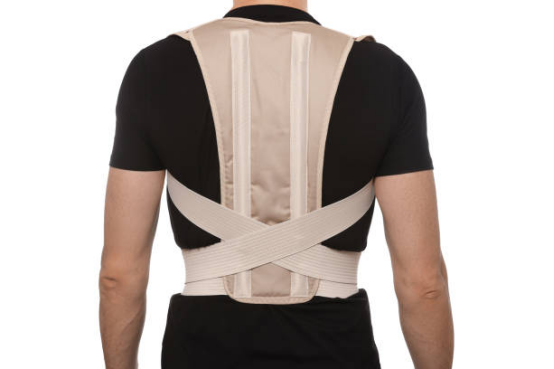
The details of the manufacturing process determine “how long it lasts,” not “how tightly it’s stretched.”
If materials determine the upper limit, then the manufacturing process determines the lower limit.
The typical characteristics of products priced around 100 yuan in terms of manufacturing process are simple stitching, modular design, and limited adjustability. This does not necessarily mean poor quality, but rather that it is done to control costs and reduce production complexity.
The problem is that the human body is not symmetrical. Shoulder height, back width, and chest thickness all vary from person to person. When the manufacturing process cannot provide enough room for fine-tuning, users often try to compensate for insufficient fit by “pulling it tighter,” which actually increases localized pressure.
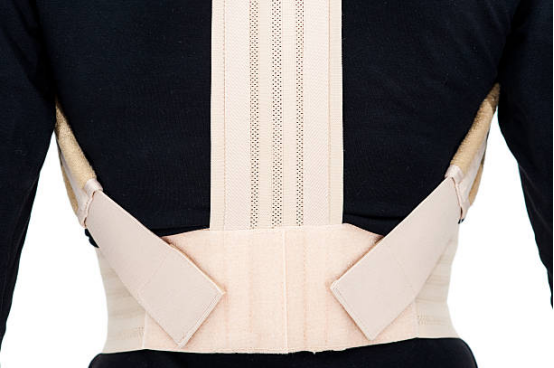
In posture correctors priced around a thousand dollars, the most common features are zoned stress design, multi-point adjustment paths, and deliberate control over the direction of the stitches. The goal of these techniques is not stronger tensile strength, but rather a more even distribution of force lines.
This is also the most easily misunderstood point about the posture corrector price difference: the more expensive one is not “more forceful” but “more restrained.”
The watershed moment in R&D logic: Is it about fixing the body or training the body?
The real price difference often lies not in the manufacturing process, but in the design phase.
The development logic of low-priced products is mostly based on “physical constraints”—using external force to pull the shoulders back and straighten the back. This method is simple and direct, and the changes in posture are obvious in the short term, but it does not require a high degree of physical involvement.
In the higher-priced segment, a more common approach is “reminders and guidance.” The design focuses on making the wearer aware of changes in posture, rather than continuously replacing muscle work. These posture correctors typically do not provide continuous strong support but rather offer feedback when the body shifts.
From the perspective of professional rehabilitation, the former is more like “passive immobilization,” while the latter is closer to “active training assistance.” Neither method is absolutely right or wrong, but the applicable population and the duration of use are completely different.
This is why some users develop a dependency on low-priced products, while others find the effect less pronounced when using high-priced products. The difference lies not in the effect, but in the design purpose.
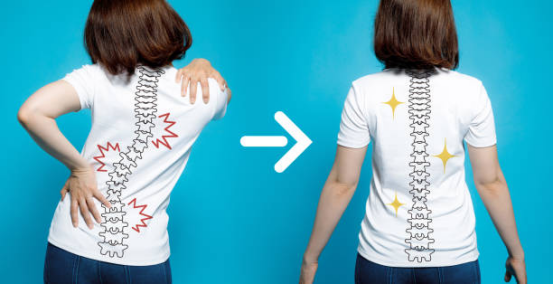
Hidden Costs: Testing, Validation, and Failure Samples
Few people think about the “cost of failure” when looking at prices.
Behind the higher-priced posture correctors often lies a neglected R&D process: prototype testing, user trials, feedback-based revisions, and even rejected design solutions. These cannot be directly quantified as “features,” but they do constitute a real cost.
Conversely, lower-priced products rely more on mature molds and existing structures, with R&D investment concentrated on appearance or marketing. This is not a moral judgment but a choice of business model.
For consumers, this difference manifests in the stability of the user experience. Not every high-priced product is better, but they are more likely to perform less “out of control” under extreme usage conditions.
Additional services are often underestimated.
When the price crosses a certain range, factors beyond the product itself begin to emerge.
For example, clearer wearing instructions, more comprehensive posture education content, and even long-term usage recommendations. These don’t directly improve posture, but they do affect the results of use.
stop.”In some user interviews with premium posture support, one frequently cited feedback was: what is truly helpful is not the product itself, but knowing when to use it and when to stop”.
This information is essentially part of the service cost. It won’t be listed in the specifications, but it will be reflected in the price.
So, how should we interpret the price?
Returning to the most practical question: what is the core difference between a posture corrector costing a hundred dollars and one costing a thousand dollars?
The answer isn’t romantic—it lies in what “uncertainties” you’re willing to pay for.
forFor products priced around 100 yuan, you’re buying immediate, visible support;
For products priced around 1000 yuan, you’re buying stability, comfort, and more complex ergonomic considerations over long-term use.
spent. “If you’re focused on the posture corrector price difference itself, then price doesn’t equal effectiveness;
But if you’re focused on the value for money in posture support, then “where the money is spent” is more important than “how much money was spent.”
Rational consumption is not about choosing the middle price but about choosing what fits your logic.
The most common misconception in the market is using price as a filter when choosing a posture corrector. In fact, a more effective approach is to start with the usage scenario.
Do you need short-term reminders from a posture corrector or long-term training?
Do you prioritize strong support or continuous wear?
Are you willing to pay extra for a lower risk of discomfort when using a posture corrector?
These issues are far more crucial than whether a posture corrector is “expensive” or not.
To further understand the logic behind different posture corrector designs, you can read analyses of posture support design principles and re-examine the price differences from a design perspective.
Ultimately, rational consumption is not about rejecting high prices or blindly believing in low prices, but about clearly understanding which part of the value a posture corrector provides and which part you are willing to give up.
Perhaps the next time you see a price difference, you won’t just focus on the numbers but on the choices that are hidden behind them.