
Many people experience midday fatigue despite adequate sleep and even a cup of coffee. Using a posture corrector can help address a subtle but often overlooked factor—posture. By noon, you may notice your shoulders feeling heavy, chest tight, and breathing shallow. While stress, age, or recent fatigue are common explanations, the underlying cause often lies in sustained postural imbalances.
Hunchback, rounded shoulders, and forward head posture are not merely cosmetic concerns. They function like a continuous “energy leakage system,” subtly affecting breathing, circulation, and the positioning of internal organs. Over time, these postural patterns manifest as decreased daily energy levels, which is why posture and energy efficiency are increasingly highlighted in research and clinical discussions.

When the body collapses, breathing is the first thing affected.
From an anatomical perspective, the human body’s energy supply begins with respiration. The extent of chest cavity expansion directly determines whether each inhalation can fully complete oxygen exchange.
In a hunched posture with rounded shoulders, the anteroposterior diameter of the thorax is significantly reduced. The ribs sink, restricting diaphragm movement. As a result, the breathing pattern degenerates from deep, slow abdominal breathing to shallow, rapid upper chest breathing. Studies show that poor posture can reduce vital capacity by 10%–30%. This doesn’t cause immediate breathlessness but subtly reduces oxygen intake per breath, leading to fatigue, decreased concentration, and a vague feeling of low energy. Consistent use of a posture corrector can help keep the chest open and maintain more efficient breathing patterns.
When internal organs are “compressed,” digestive and metabolic efficiency decrease simultaneously.
Changes in posture affect not only bones but also internal organs. In an upright posture, organs rely on fascia and abdominal pressure to maintain position. Prolonged hunching and slumping compress the upper abdomen, slightly shifting the stomach, intestines, and liver.
Although this doesn’t immediately cause pain, it reduces digestive efficiency and venous return. Clinically, people with poor posture often feel sleepy after meals or notice fatigue increases with food intake. Consistent use of a posture corrector can help maintain proper thoracic and abdominal alignment, supporting internal organ function. A posture corrector strap also reminds the user to maintain posture during sedentary periods, indirectly supporting metabolism and energy levels.
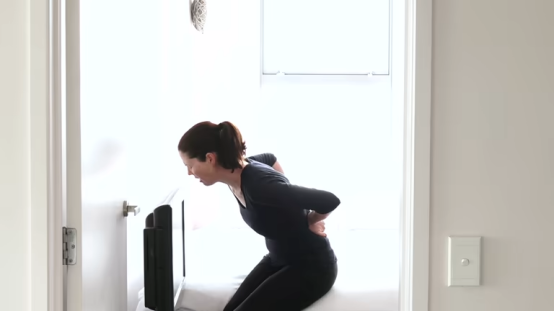
Blood circulation is disrupted, and muscles become “energy black holes.”
Rounded shoulders and forward head posture keep neck and shoulder muscles under prolonged tension. The trapezius and pectoralis minor shorten, while deep stabilizing muscles gradually disengage. This imbalance increases pressure on local blood vessels, reduces circulation, accumulates metabolic waste, and forces muscles to expend more energy just to maintain posture. Some studies suggest that static sitting in poor posture actually consumes more energy than proper sitting, leaving the body feeling exhausted despite minimal activity. A posture corrector or posture support device can relieve this tension, engage deep stabilizers, and maintain proper alignment, reducing unnecessary energy loss.
The hidden costs of the nervous system: persistent low-level alarms
Forward head tilt and abnormal spinal curvature disrupt proprioceptive input. The brain continuously corrects body position to maintain stability, consuming cognitive resources. This manifests as easy distraction, mental fatigue, and decreased work efficiency. A posture corrector can reduce this hidden neural load by providing subtle cues to maintain alignment. Using a posture corrector brace throughout the day helps the nervous system operate more efficiently, preserving both physical and mental energy.

If physical condition improves, will energy levels really change?
This is the part that many people care about, and it’s also the part most likely to be questioned.
In the fields of physical therapy and ergonomics, some interventional studies have shown a relatively clear trend: when subjects regained a posture closer to neutral through posture training or external reminders such as a posture corrector, their subjective fatigue scores decreased by an average of 15%–25%. At the same time, respiratory efficiency and heart rate variability indicators improved. Using a posture corrector device provides subtle cues that reinforce proper alignment and encourage consistent postural awareness throughout daily activities.
It is important to emphasize that this is not a change that “takes effect in a day,” but rather an adjustment in energy consumption as the body gradually adapts to the new force distribution. A posture corrector brace helps the user notice small collapses or slouching moments before they become habitual, supporting sustainable improvement over time.
In this process, the posture corrector is often used as a “reminder tool” rather than a passive support. It provides gentle feedback to make the body aware of moments of collapse, helping re-establish postural awareness. From a physiological perspective, this active participation—enhanced by the posture corrector strap—is more sustainable than simply relying on muscle strength to hold posture, and it promotes long-term energy efficiency.
Why do many people feel more tired when they stand up straight?
A common counterintuitive phenomenon is that you are more likely to get tired when you first start correcting your posture.
The reason is simple. With prolonged poor posture, some muscle groups that should be working remain dormant, while others overcompensate. When you try to return to a more ideal posture, the dormant muscles are reawakened, naturally resulting in short-term fatigue.
This isn’t a bad sign; it’s a sign of a system restart. Just like joints that haven’t been used for a long time will feel sore and stiff when they start moving again.
At this stage, short-term, low-intensity posture interventions using a posture corrector are often gentler and easier to maintain than forcibly “straightening up.”
Hidden energy consumption points in everyday scenarios
What truly drains energy is often not exercise, but these seemingly harmless moments:
- Looking down at a mobile phone for a long time
- A half-lying, half-sitting posture on the sofa
- unconsciously leaning forward in front of the computer
These postures have limited impact on a single instance, but when combined, they can cause the body to operate in an uneconomical mode for a long period of time.
Save your energy for life, instead of using it to “stay healthy.”
When we talk about energy, we usually focus on sleep, diet, and exercise but rarely realize that body shape itself is a constantly changing variable.
A posture corrector isn’t about “changing you immediately,” but about helping you reduce unnecessary energy loss. When the body no longer needs to expend extra effort to maintain balance, energy naturally returns to more important areas.
If you wish to gain a more systematic understanding of the relationship between posture, breathing, and energy, you can refer to some extended content on posture and vitality balance to re-examine the sources of daily fatigue from different perspectives.
Perhaps what truly exhausts us isn’t the workload of the day but rather the unhealthy postures our bodies silently endure. Before waking up tomorrow, it’s worth asking yourself, “Where did I spend my energy today?”