Want to Improve Your Posture? Discover the Science Behind Posture Correctors

Many people think posture correctors are just simple shoulder and back straps—but that’s not the case. Modern posture correctors combine scientific principles, ergonomic design, and high-tech materials, allowing you to easily correct your posture in daily life and reduce shoulder and neck discomfort. Today, we’ll explore the science and design behind them, and teach you how to wear one properly so your posture feels natural and comfortable.
1. Ergonomic Design for Comfortable Correction
Fits the natural curve of the spine: Posture correctors are designed according to the natural curvature of your spine. Shoulder straps and back supports prevent over-stretching or pressure in the wrong areas.
Even weight distribution: Wider straps and reinforced back panels distribute pressure across your shoulders and upper back instead of focusing on a single point.
Adjustable structure: Most correctors allow you to adjust shoulder and chest straps to fit different body types, making them more comfortable to wear.
Tip: Choose a corrector that fits your body—an ill-fitting one can actually worsen your posture.
2. High-Tech Materials for Everyday Comfort
Breathable mesh fabric: Keeps you cool in summer and prevents discomfort from sweat and heat.
Lightweight alloy support bars: Internal support bars provide posture correction without adding extra weight.
Elastic fabrics: Shoulder and chest straps offer support while allowing full arm movement without restriction.
Tip: Look for breathable, washable materials for long-term daily use.
3. The Science Behind the Design
Posture feedback mechanism: Gentle tension reminds you to keep your shoulders back, helping build long-term posture memory.
Shoulder and back muscle activation: When worn correctly, the muscles are slightly engaged, improving strength and balance over time.
Pressure distribution design: Shoulder straps and back panels often use three- or four-point distribution to reduce concentrated pressure and discomfort.
Tip: Don’t wear it for long periods at first—gradually increase wear time so your muscles can adjust.
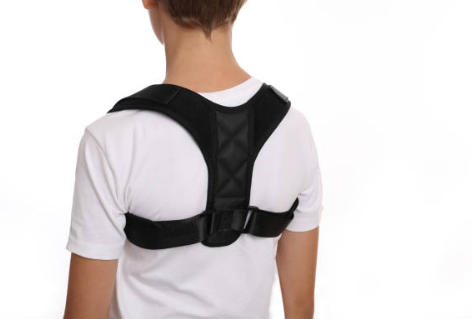
4.How to wear a posture corrector?
Step 1: Adjust shoulder straps
Set the straps to your shoulder width—not too tight, not too loose.
Step 2: Adjust chest strap and back panel
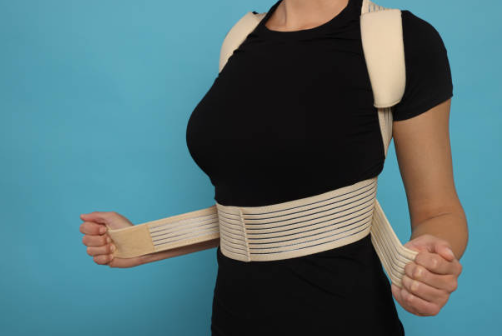
Chest strap should sit snugly below the chest, back panel aligned with the shoulder blades, keeping shoulders naturally back.
Step 3: Proper putting-on sequence
Slip over your head or arms first, then secure the chest strap, ensuring a snug fit.
Step 4: Gradually increase wear time
Start with 30 minutes a day, gradually increasing to 2–3 hours as muscles adapt.
Step 5: Combine with simple stretches
Shoulder blade squeezes and back stretches enhance the corrector’s effectiveness.
5. Daily Use Tips & Precautions
Don’t rely on it completely: A posture corrector is a tool—your muscles still need training to maintain proper posture.
Prioritize comfort: If you feel pain or pinching, adjust straps immediately.
Combine with your routine: Standing up, stretching, and relaxing your shoulders and neck amplify the benefits.
Clean regularly: Breathable fabrics can accumulate sweat, so washing keeps it hygienic and prolongs use.
6. Quick Tips Summary
Choose ergonomic support designs
Lightweight, breathable materials with adjustable straps
Wear gradually, avoid long continuous sessions initially
Combine with stretches and muscle training for natural posture
Integrate into daily and office habits for long-term improvements
Conclusion
Modern posture correctors are far from just simple straps—they combine scientific posture principles, ergonomic design, and high-tech materials.
The “stand tall, feel light–the invisible corrector” is a great example—it provides ergonomic support, is easy to hide under clothing, and stays discreet.
Worn correctly and progressively, it can relieve shoulder and neck discomfort, correct slouching, and help you maintain a confident, upright posture throughout the day.
Remember, improving posture isn’t only about the corrector—it also depends on your muscles and daily habits. Master how to wear it properly, and a posture corrector can become your “invisible assistant” for effortlessly achieving a healthy, strong posture.