Does your chair truly make you feel relaxed? Perhaps it’s time to switch to a posture corrector

Many office workers mistakenly believe that a soft office chair can relieve fatigue, but the opposite is true. Relying on this “pseudo-relaxed” posture for a long time will cause the spine to lose active support, leading to lower back pain.
However, “comfort” only provides temporary sensory pleasure and cannot bring long-term physical balance.
A chair may allow you to relax for a few minutes, but it may unknowingly deprive your spine, cervical spine, and lumbar spine of support.
To truly improve posture health, you can use a posture corrector to help your body re-establish core support and spinal balance, say goodbye to false comfort, and return to true relaxation and upright posture.
The truth behind false relaxation: the body is asleep and the muscles are absent
You think your body is relaxed, but in fact it is just the support system that is “shut down.”
The human body needs to maintain three core balance points when sitting:
The natural S-curve of the spine
Vertical support of the shoulders and neck
The core muscles are slightly stretched
When you lean back in a chair for extended periods, these three balance points are disrupted.
The supporting muscles in your back gradually lose strength, and your core muscles begin to slack off. Over time, your body learns to slouch—the more you relax, the more you slump. And the more you slump, the more tired you become.
Therefore, false relaxation is like a vicious cycle: the more you lean in, the less your body participates.
The less your body participates, the more you need a “more comfortable chair” to support you.
But true relaxation is supported relaxation. It does not let the body “sleep,” but allows the muscles to maintain natural tension and balance with minimal energy consumption.
The Posture Crisis of Modern Workers: A Generation Shaped by Screens
Have you ever noticed your screen posture?
Lowering your head, hunching your chest, and leaning forward—these movements may seem minor, but they add up to more than ten hours a day.
The result is:
The cervical spine bends forward, creating what is known as a forward neck ;
Long-term stretching weakens the back muscles;
The shoulders are pulled forward and inward, forming “rounded shoulders”;
Pressure is concentrated in the lumbar spine, causing chronic pain.
The biggest problem with this state is that you’ve lost awareness of your body. You no longer know what “straight” means or what “natural” means.
So, even when you stand up, you often subconsciously shrug your shoulders and hunch your back. Your body language is degenerating, yet we think we’re just “relaxing.”
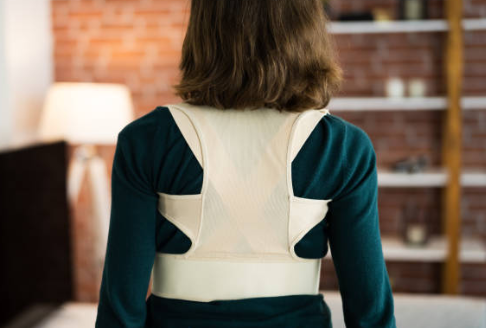
The problem isn’t the chair, it’s that you forgot to actively support yourself.
The most expensive chair on the market can’t help you build muscle.
What can truly save your spine isn’t the chair itself, but whether you can get your body back into the act of sitting.
At this time, there is an often overlooked but very critical auxiliary tool—an adjustable posture corrector.
It is not a restraint that forces you to stand straight, but a dynamic reminder:
When you start to hunch over, it will give you a slight tug, letting you know your posture is slipping.
It can be adjusted to fit your shoulder width and body shape without affecting your breathing or movement.
Most importantly, it helps the body rebuild muscle memory .
This is not “straightening by external force” but “awakening by external force.”
Wearing it when sitting for a long time is like installing a posture radar for the body.
It won’t make you dependent but will help you learn to be self-reliant.
Do posture correctors actually work?
A posture corrector isn’t a magic device that will instantly change your body structure.
Its primary purpose is to help you recognize changes in your posture and train your body to return to its natural state.
In the initial stages of use, it acts as a “posture assistant”—helping you identify incorrect posture.
As your muscle strength recovers, you can gradually reduce the amount of time you wear it.
In other words, its goal is not to make you rely on it for a lifetime, but to let you regain the muscle memory of “correct posture” through a few weeks of “muscle education”.
This is the real “correction”—not being straightened by external force, but being awakened by consciousness.
Rebuilding True Relaxation: Physical Engagement, Not Physical Escape
To make relaxation real, you have to redefine it.
True relaxation is not to lean back in a chair and close your eyes to rest but to let your body be in a state of “conscious lightness”.
You can start like this:
For every hour you sit, stand up and walk around for 2 minutes.
When working, keep your feet flat on the ground and your shoulders hanging naturally.
Use a posture corrector as an “active reminder” so your body remembers what it feels like to sit up straight.
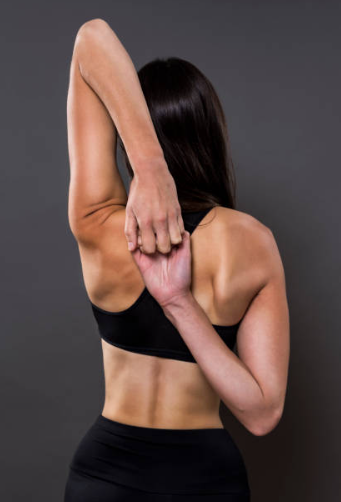
Do simple back stretches or shoulder relaxation exercises after getting off work.
These small movements are the signal that your body is back online.
Once you get used to this awareness, you’ll notice less back pain , smoother breathing , and even a lighter mood.
Because the body and emotions are connected , the moment you straighten your body, your spirit also rises.
Summary: It is better to rely on yourself than on a chair
A comfortable chair is fine, but it’s not a panacea.
What really determines your health is whether you re-engage with your posture .
Stop pinning your hopes on the backrest—let your body return to its proper position and let your muscles remember their duties again.
Starting today, give your body a little reminder: “Standing straight” is not tiring but a gentle self-respect.
An adjustable posture corrector is not designed to restrain you but to help you regain the freedom your body deserves in a sedentary life.
Because ultimately, the best support is not in the chair, but in yourself.