Styling tips for a posture corrector that won’t look awkward when paired with formal wear.

Under the refraction of conference room lights, every detail can be magnified—from the curve of a tie to the hunch of a back. An upright posture often conveys more presence than an expensive suit. But the reality is that after long meetings and computer work, most business professionals experience a gradual slumping of the shoulders and back and a loss of posture. As a result, more and more people are paying attention to a seemingly small but far-reaching accessory: a posture corrector.
The question is how to wear it without compromising your professional image. How to correct your posture while maintaining a sharp look? This article will guide you through the techniques of “invisible wearing,” making the invisible posture corrector your secret weapon under your suit, rather than an unnecessary burden.
Why do professionals need hidden posture support?
In the workplace, posture is a silent language. Studies show that maintaining an open and upright posture can boost self-confidence and decision-making ability; conversely, slouching and hunching over can subconsciously weaken one’s sense of authority.
However, traditional posture correctors are usually bulky with exposed shoulder straps, making them difficult to coordinate with formal attire such as suits and shirts. Many office workers give up after trying them on for simple reasons—”too obvious,” “uncomfortable,” and “looks like I’m carrying some kind of medical device.”
This is precisely why the concept of the invisible posture corrector has emerged. The new support system uses a thin fiber structure that perfectly conforms to the body’s curves, allowing you to maintain an upright posture seamlessly during meetings, presentations, or commutes.
More importantly, these invisible designs are changing people’s perception of “health aids”—from functional tools to everyday “posture accessories.”
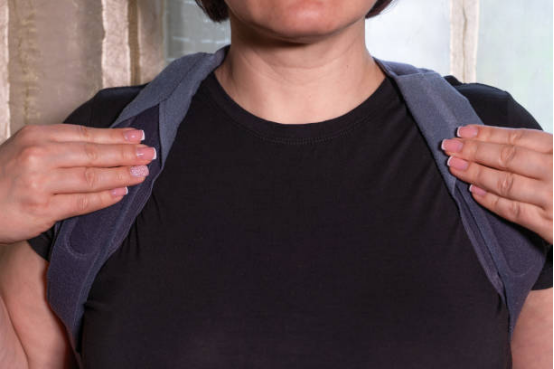
How to perfectly integrate posture corrector with formal wear
To truly make under-clothes posture bras invisible, styling strategies are more important than the product itself. The following points are dressing principles summarized by industry stylists and workplace health consultants.
1. Choose high-density shirts or
light-colored or thin shirts made of knit fabric, as these are most likely to accentuate the shoulder strap lines. If you plan to wear a posture corrector for extended periods in the office, it is recommended to choose a higher-density pure cotton or lightweight wool material, as these will naturally conceal the silhouette and remain breathable.
2. Optimize the silhouette and proportions.
A well-tailored formal coat is the best “covering layer.” A slightly supported shoulder and a slightly tapered waist not only balance the thickness of the posture corrector but also make the overall lines smoother.
3. Make good use of layering
in your outfits by adding lightweight vests, knitted vests, or suit vests to further conceal the supporting structure. This discreet posture support method avoids looking bulky and adds more depth to your clothing.
4. Pay attention to color matching.
Choosing a posture corrector that is similar to your skin tone or underwear color can significantly reduce the see-through effect. Black, skin tone, and light gray are the most universal choices and are almost imperceptible under lighting.
5. Controlling the “fit”:
Many users find it too tight when wearing it for the first time, causing their suits to bulge or their shoulder lines to become uneven. In fact, postural support is not more effective the tighter it is. The correct fit should be “very barely noticeable but with noticeable support,” meaning a natural posture and easy breathing.
These techniques not only solve the “invisible problems” in appearance but also allow the posture corrector to truly integrate into your daily styling system.
Stealth posture strategy in business scenarios
Different work environments have different requirements for posture and comfort. Here are some suggestions for typical scenarios to help you maintain a natural and upright posture in various professional situations.
Meeting Day: Maintain an upright but not stiff posture.
During long meetings, maintaining an upright posture can easily lead to neck and shoulder fatigue. At this time, a lightly supported invisible posture corrector can help you maintain your posture without restricting movement. Wear it with a breathable shirt, and unbutton your suit jacket when sitting down to allow for greater flexibility.
Speech or Presentation Day: Let Body Language Convey Trust.
Research shows that a speaker’s posture accounts for 55% of the overall impression score. An upright posture makes the voice more stable and the tone clearer. You can wear a posture brace 30 minutes beforehand to get your body into optimal condition. This preparation is like a warm-up, allowing your muscles to memorize the correct posture.
On a typical office day: Breathe easily and stretch naturally.
For those who need to work at a desk for long periods, it is recommended to remove the support before lunch break to allow the body to relax naturally. Posture correction is a form of “rhythm training,” not a constant, tense constraint.
Business Travel: Balancing Comfort and Support.
Long flights or busy meetings often lead to stiff backs. In these situations, a lightweight, discreet posture support can provide extra stability. Remember to remove it before airport security to avoid any misunderstandings.
The accumulation of these details will unconsciously reshape your professional image—not a deliberately maintained upright posture, but a natural exudation of composure and confidence.
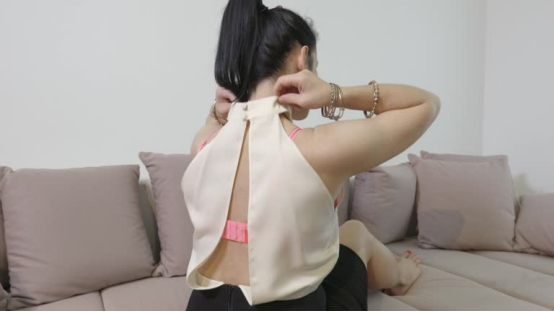
Workplace posture
Posture management is becoming part of the new generation of business etiquette. From Silicon Valley to Tokyo, more and more companies are incorporating posture training into their employee wellness programs. According to the 2024 Global Ergonomic Workplace Report, approximately 63% of executives believe that good posture directly impacts team trust and communication efficiency.
Meanwhile, advancements in wearable technology are making posture correctors smarter and more discreet. Some brands have already introduced temperature-regulating fibers and micro-pressure sensing systems that can automatically adjust support based on the user’s posture. This means that future under-clothes posture braces will no longer be passive tools but rather proactive “micro-coaches” that sense the body’s condition.
This trend has also inspired a new concept in business attire—function is aesthetics. When health and fashion are no longer contradictory, body management can naturally be integrated into daily life.
The invisible power comes from confidence in the details.
Posture is never just a simple physical posture; it’s a signal. It tells others whether you are confident, in control, and trustworthy. The significance of a posture corrector isn’t just about making you “straighten up,” but about reminding you that good posture is an outward manifestation of inner strength.
Whether you’re wearing a three-piece suit or casual business attire, knowing how to discreetly wear an invisible posture corrector is an investment in your professional image.
After all, true elegance is never ostentatious. It lies in the balance of the shoulder line, the curve of the waist and back, and your unspoken confidence.