
Many chronic headache sufferers have experienced this: test results are normal, imaging shows no obvious abnormalities, painkillers work temporarily, but headaches always return. Using a posture corrector can help address one often-overlooked factor: posture. Subtle postural imbalances, especially in head and neck alignment, can create conditions for persistent tension headaches.
A growing body of research in rehabilitation medicine and musculoskeletal medicine highlights a common culprit: postural imbalance known as “upper crossed syndrome.” This condition subtly changes head and neck position and alters muscle tension distribution, making tension headaches more likely in people with prolonged sitting, screen use, or mental exertion.
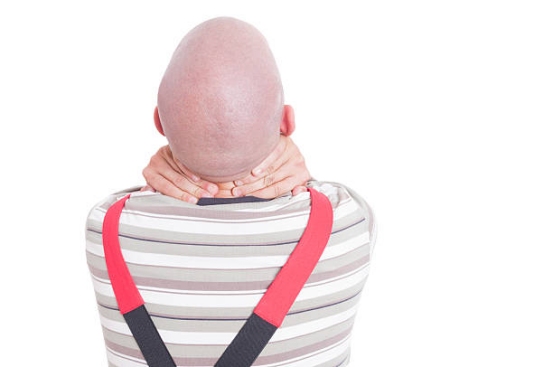
How Upper Crossed Syndrome “Brings” Tension into Your Head
Upper crossed syndrome is not a rare term; it has become almost the “default setting” for modern office and screen-based lifestyles. Many people turn to a posture corrector as a tool to help address this common imbalance.
Viewed from the side, the typical features are very clear: the head protrudes forward, shoulders are hunched inward, and the upper back is slightly rounded. Corresponding muscle states reveal a striking contradiction—the pectoralis minor, upper trapezius, and levator scapulae remain tense and shortened for long periods, while the deep neck flexors, lower trapezius, and rhomboid muscles are inhibited and weak. Using a posture corrector can provide subtle cues to activate these weak muscles and support better alignment.
The first problem caused by this “cross-imbalance” is not immediate pain, but persistent underlying tension. For every centimeter the head moves forward, the load on the cervical spine increases exponentially—a phenomenon often described as the “lever effect,” where weight that should be supported by the skeletal structure shifts onto soft tissues. A properly fitted posture corrector can help redistribute this load and relieve excessive strain.
Over time, the neck muscles remain in a state of continuous contraction, restricting local blood flow, allowing metabolic waste to accumulate, and increasing nerve sensitivity. As a result, the most common outcome is a tension headache. Many patients describe it not as a “stabbing” pain but as a dull, oppressive sensation—exactly the type of discomfort that a well-used posture corrector aims to mitigate.
How neck posture determines the frequency and duration of headaches
Clinical observations show that poor neck posture directly affects headache occurrence. Forward head posture straightens or reverses the natural cervical curve, stressing suboccipital muscles that are close to nerve exits. Prolonged tension in these muscles amplifies pressure fluctuations into headache signals, often appearing “for no reason” after long periods of sitting or screen time.
The body may gradually normalize this posture, so muscle tension is unnoticed until headaches become the only symptom. Pain relief alone rarely addresses the root cause. Regular use of a posture corrector, combined with posture awareness exercises, can help restore natural alignment, reduce chronic tension, and prevent headaches from recurring.
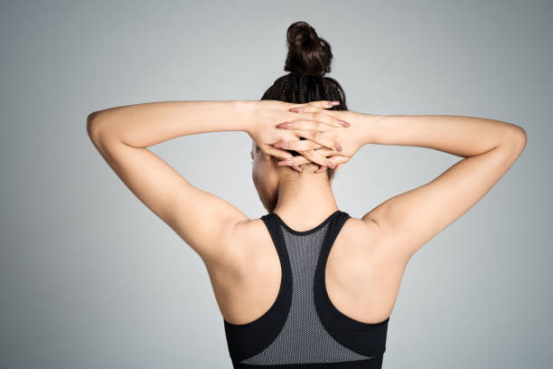
Posture corrector: How to change pressure distribution at its source
. When discussing the relationship between posture correctors and headaches, a clear premise is needed: it is not a pain relief tool but a posture intervention tool.
Its core function is not to “straighten the body,” but to reposition the relative relationship between the head, shoulders, and torso through external feedback. When the head returns to a more neutral position, the load on the cervical spine decreases, and the tension chain of upper crossed syndrome is broken.
In principle, a posture corrector exerts its influence primarily through three levels:
First, limit the tendency to overextend. When the shoulder girdle or back structure senses a postural shift, provide a clear but gentle reminder to prevent the head from continuing to “hang” forward.
Secondly, it restores scapular stability. Once the scapular position improves, the neck and shoulder muscles no longer need to compensate for contraction, and the overall tension level decreases accordingly.
Third, it indirectly improves breathing patterns. When the body is fully extended, the range of motion of the rib cage increases, and breathing changes from shallow and rapid to a deeper and slower rhythm, which in itself helps to reduce the excitability of the nervous system.
This is why, in user feedback on posture headache relief, many people don’t mention “immediate relief from the pain,” but rather “a decrease in the frequency of headaches” and “the feeling of tightness no longer persists throughout the day.” This precisely aligns with the expected pathway of postural intervention.
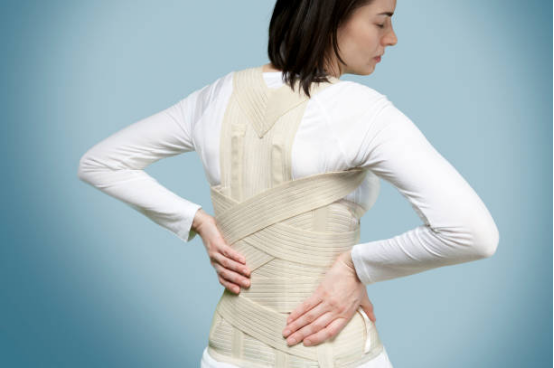
Why do some people use it correctly while others feel even more uncomfortable?
. It’s worth noting that not all user experiences are positive. This isn’t contradictory; rather, it highlights the importance of user logic.
If a posture corrector is overused or worn too tightly, the body may enter a passively immobilized state. This can actually reduce the involvement of deep stabilizing muscles, potentially leading to new discomfort in the neck and shoulder area.
factor but Furthermore, some headaches are not caused by a single postural factor but rather by a combination of variables such as stress, sleep, and eye strain. In such cases, adjusting posture can only address one aspect of the problem.
This is why professional advice often emphasizes treating a posture corrector as a “reminder” for posture training, rather than a 24/7 support. Short-term, specific use, combined with active awareness of head position, actually yields more stable results.
When headaches become a signal rather than an enemy
Chronic headaches are annoying, but they are honest enough. Their recurring nature often serves as a reminder that the body is handling daily loads incorrectly.
From the causal chain of upper crossed syndrome to neck posture and headaches, and then to the intervention logic of posture correctors, they are all essentially talking about the same thing—posture is not a static shape but a dynamic way of distributing stress.
If headaches consistently occur after prolonged sitting, the problem may not lie in the head itself but rather in the position where it rests daily. The next time the tension resurfaces, it might be worth pausing to consider: is your body supporting your head, or “dragging” it forward?
The answer to this question may be the starting point for change.