
In the early morning subway, people are glued to their phones, shoulders naturally hunched forward, backs slightly slumped—even with a posture corrector in mind, these habits often feel invisible in daily life; in front of floor-to-ceiling windows in office areas, people who have been sitting for long periods unconsciously lean closer to their screens, their chests gradually compressing. Few people would associate these images with the heart, but medical and ergonomic research repeatedly points to the same fact: posture is not just a matter of appearance; it truly alters the burden on the heart.
As “posture and heart health” gradually becomes a topic of discussion, people are beginning to realize that long-term hunching, poor posture, and chest collapse may be slowly but steadily affecting the efficiency of the cardiovascular system. This is one of the reasons why the role of a posture corrector is increasingly being mentioned in health management discussions—not as a rigid tool for forcing alignment, but as a way to restore postural awareness and reduce sustained strain on the upper body.
How bad posture can quietly increase the burden on the heart
From a physiological perspective, the heart is not an “independent” organ. It is located in the center of the chest cavity, surrounded by ribs, the spine, the diaphragm, and soft tissues. Prolonged postural shifts—often the very issues a posture corrector is designed to address—can compress or stretch this space.
When sitting with a hunched back or rounded shoulders, the anteroposterior diameter of the chest cavity decreases significantly. Studies show that reduced chest wall mobility restricts lung expansion, leading to decreased oxygen uptake efficiency. To compensate for insufficient oxygen supply, the heart often needs to increase its beating rate, thus increasing its workload. This is why some people who work at a desk for long periods are found to have a high resting heart rate during physical examinations, but no obvious organic heart problems can be found.
Furthermore, forward flexion of the spine can affect the natural course of major blood vessels. When the upper back is chronically rounded, the aortic and venous return pathways may be slightly compressed, reducing blood return efficiency and increasing the “effort” required for the heart to pump blood. These changes may not immediately cause severe symptoms but can accumulate over several years into what some clinicians describe as “chronic cardiac stress.” In this context, posture intervention—whether through awareness training or a posture corrector—is increasingly being discussed as a long-term preventive factor.
In interviews with cardiologists, more and more experts are beginning to emphasize a neglected variable: posture, which is a key element in reducing heart stress.

The subtle relationship between sitting posture, standing posture, and cardiovascular efficiency
If we imagine the body as a hydraulic system, then posture is the structural framework that determines whether the pipes flow smoothly. An upright, symmetrical standing posture allows blood to flow smoothly under the combined effect of gravity and muscle pumps, while a skewed or collapsed posture over a long period of time is more like artificially creating “bending points.” This is precisely why posture correction—sometimes assisted by a posture corrector—is not merely cosmetic but structural.
This problem is particularly pronounced in sedentary settings. Leaning forward and slouching at the back cause continuous tension in the neck and thoracic outlet areas, affecting blood circulation between the upper limbs and the heart. Symptoms of “heart palpitations” or “chest tightness” described by some office workers, after ruling out anxiety and caffeine, are often highly correlated with persistently poor posture.
The same applies to standing posture. Bearing weight on one side, anterior pelvic tilt, or uneven shoulder lines will keep the body in a compensatory state for a long time. Asymmetrical muscle contraction will involve the fascial system and indirectly affect the activity of the diaphragm—an important “second heart” that assists venous return. In many ergonomic discussions, tools such as a posture corrector are mentioned here not as a cure, but as a way to interrupt this long-term compensatory pattern.
These seemingly disparate mechanisms all ultimately point to the same conclusion: posture determines the environment in which the heart works, rather than merely a person’s physical appearance.
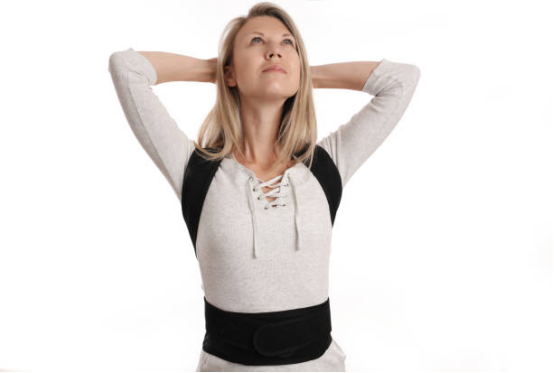
The role of posture corrector in the relationship between body posture and heart health
In this context, the meaning of a posture corrector has long since transcended simply “reminding you to straighten your back.” From a functional perspective, it is more like an external neurofeedback tool.
Many users share the experience that when the body begins to lean forward or hunch, the corrective device immediately alerts them to the postural shift through slight traction or pressure changes. This immediate feedback helps reactivate long-neglected back and core muscles, rather than passively “straightening” them.
From a cardiac health perspective, this effect does not directly intervene in the heart itself but rather indirectly optimizes the heart’s working conditions by improving chest wall opening, spinal alignment, and breathing patterns. Some observations in the field of rehabilitation indicate that after postural improvement, some individuals experience increased breathing depth and a slight decrease in resting heart rate.
It is worth noting that in discussions about the posture corrector for heart disease prevention, professional opinions generally remain restrained: it is not a medical device and cannot replace medication or cardiac treatment. However, as part of lifestyle modifications, it has practical significance in reducing long-term posture-related risks.
This is why posture assessment and postural intervention are beginning to be incorporated into the overall recommendation system in some cardiac rehabilitation and workplace health management programs.
Real Signals from User Feedback and Industry Observations
In international health forums and user communities, descriptions of changes after posture improvement are often very specific, rather than general.
Some people have reported a significant reduction in afternoon chest tightness after consciously adjusting their posture and using a posture corrector for several weeks. Others have noticed a more natural expansion of the chest cavity during deep breathing and a less rapid spike in heart rate during exercise. These experiences are not medical conclusions, but they constitute real-life evidence.
At the industry level, interdisciplinary research on ergonomics and cardiovascular health is increasing. More and more articles are beginning to discuss the long-term relationship between posture and heart health from the perspective of “systemic stress” rather than single diseases. This trend itself indicates that posture issues are being redefined—no longer just an aesthetic issue, but part of the structure of health.
When we talk about heart health, are we ignoring the most fundamental variables?
In discussions about heart disease, diet, exercise, and stress management always take center stage, while posture is often seen as a minor, “icing on the cake” detail. But the reality may be quite the opposite: posture is a fundamental input that continues for hours every day, even for decades.
A posture corrector may not be about “correction” itself but about making people realize the connection between body structure and the heart. When straightening the back becomes a conscious and memorable feeling, the space where the heart is located also changes.
Perhaps the next time you feel tightness in your chest and shallow breathing, the problem isn’t necessarily with your heart, but rather with your posture. Could this often-overlooked moment be the starting point for improving your posture to reduce heart stress?