A posture corrector makes your breathing smoother and more stable.

The fast pace of modern life leads many people to spend long hours hunched over their desks or looking down at their phones, causing their chests to contract and their breathing to become shallow and unsteady. Have you noticed that when you’re anxious or under a lot of stress, your breathing becomes rapid and shallow, and your body seems to be enveloped by an invisible tension? This is a direct manifestation of posture problems and limited chest movement. In such situations, a posture corrector plays a crucial role in improving breathing efficiency and chest mobility.
Through scientific chest expansion and dynamic rib adjustment, the posture corrector helps the body re-establish a natural breathing pattern, allowing you to maintain deep breathing and stable airflow even under stress and anxiety. This article will analyze in detail how the posture corrector improves breathing posture, explore the scientific principles behind it, and illustrate its value for people with anxiety and high stress levels through practical usage scenarios.
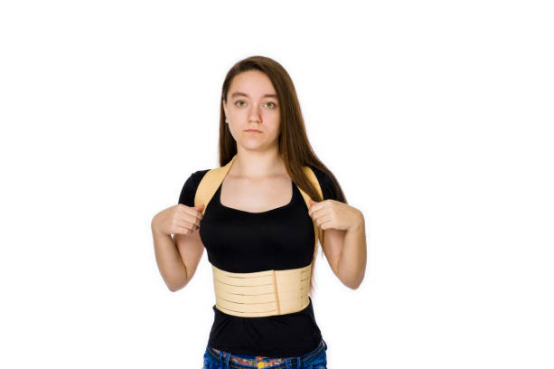
1. The key link between chest expansion and breathing posture
The core of breathing lies not only in the lungs themselves but also in the flexibility of the chest cavity and ribs. Scientific research shows that the dynamic range of the ribs directly affects the depth of inhalation and the smoothness of exhalation. Prolonged poor sitting posture or a head-down posture can lead to thoracic flexion, restricted rib movement, and obstructed chest expansion, thereby causing shallow breathing and respiratory instability.
The Importance of Deep Breathing Posture
Deep breathing not only provides more oxygen but also activates the parasympathetic nervous system, lowering heart rate and stress levels. The movement of the ribs and the expansion of the chest cavity determine the adequacy of breathing: if the ribs are stiff, the chest cavity cannot expand effectively, reducing the amount of air inhaled and resulting in rapid, shallow breathing.
Using a posture corrector can help the shoulder blades open naturally, maintain proper extension of the thoracic spine, and allow the ribs more room to move. By keeping the chest expanded, breathing becomes not only deeper and more steady but also brings a sense of relaxation throughout the body, allowing the body and mind to enter a soothing mode in sync.
Breathing difficulties in anxious individuals
When facing stress and anxiety, shallow breathing can further exacerbate tension. A posture corrector gently supports the back, shoulder blades, and thoracic spine, restoring breathing to a natural and smooth rhythm. This helps anxious individuals achieve a deeper and more stable breathing rhythm, thereby alleviating mood swings and muscle tension.
2. How a posture corrector improves rib mobility
Rib mobility (posture corrector) is a core indicator of respiratory efficiency. The ribs, along with the spine, pectoral muscles, and scapula, form a dynamic, interconnected system; only sufficient mobility can support deep breathing and respiratory stability.
The scientific principles of posture correctors
The posture corrector adjusts the position of the scapula through gentle external support, promoting thoracic spine fine-tuning and allowing the ribs to expand and contract naturally during breathing. This support is not forced or fixed but rather activates the back, shoulder, and chest muscles to work together through gentle traction and posture cues, thereby improving breathing efficiency.
For example, during inhalation, the ribs should expand upwards and outwards; during exhalation, the ribs should naturally retract. A posture corrector helps maintain the natural elasticity of the chest cavity, making this process smoother, avoiding restricted rib movement due to poor posture, and ensuring that each breath is full and stable.
The practical benefits of improved rib mobility
- Deep breathing enhances oxygen supply: the ribs expand, allowing the lungs to inhale more air and improving oxygen transport efficiency.
- Reduce tension in the chest and shoulders: Rib movement is more free, and the chest and shoulder muscles are no longer overly tense.
- Stabilize your breathing rhythm: Breathing is no longer shallow or rapid, which helps reduce anxiety and stress levels.
Long-term use of a posture corrector can help maintain chest expansion habits during daily sitting, standing, or light exercise, thereby gradually improving breathing patterns.

3. Application scenarios of deep breathing posture
Posture correctors are not only effective for static sitting postures but can also improve breathing quality in a variety of situations. Maintaining good breathing posture is crucial, whether at a desk, during yoga practice, or in a high-pressure work environment.
At the desk
In the modern workplace, prolonged desk work can cause the shoulders and chest to hunch forward. By using a posture corrector, you can gently open your shoulder blades back, keep your chest extended, and breathe deeply and steadily. This not only relieves neck and shoulder tension but also improves concentration and work efficiency.
High-pressure environment
stress,When facing a speech, meeting, or urgent task, anxiety and a racing heart often lead to shallow breathing. A posture corrector provides light support at this moment, allowing the chest and ribs to move freely, assisting in deep breathing, thereby reducing stress and enabling the body and mind to cope with challenges more calmly.
Yoga and Breathing Training
In breathing exercises or yoga practice, deep breathing postures are a core element. A posture corrector helps maintain proper alignment of the shoulders, back, and thoracic spine, ensuring the effectiveness of the breathing exercise. Through chest expansion, the lungs take in more oxygen, increasing control over breathing and allowing practitioners to enter a relaxed state more quickly.
4. The long-term value of improving breathing posture
posture correctorContinued use of the Posture Corrector not only provides immediate relief but also offers long-term health benefits. It helps establish habits of chest expansion and rib mobility, gradually improving breathing quality and shifting from shallow breathing to a deep and steady breathing pattern. For people with anxiety, this improvement can significantly reduce stress response and enhance psychological resilience and self-regulation.
Furthermore, optimizing breathing posture can improve blood oxygen levels, promote the functioning of various bodily systems, and bring about overall health improvement. Integrating with daily activities such as office work, yoga, or light exercise, the posture corrector not only corrects posture but also makes breathing a core tool for natural bodily regulation and mental relaxation.
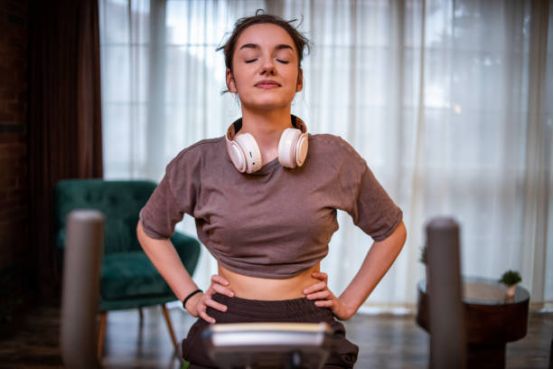
A posture corrector makes your breathing smoother and more stable.
Breathing quality not only determines the body’s oxygen supply but also affects mental state and stress management. Through a combination of chest expansion, rib mobility, and proper posture, the posture corrector helps restore a deep breathing posture, improves breathing efficiency, and stabilizes the breathing rhythm. Whether you’re experiencing high-pressure work, anxiety, or prolonged sitting, using the posture corrector correctly can provide immediate relief and long-term health benefits.
If you wish to improve your breathing posture, increase oxygen utilization, and effectively relieve anxiety and muscle tension in your daily life, explore more about the usage techniques and scientific principles of a posture corrector. Make deep breathing a daily habit for physical and mental well-being, making each breath smoother, more stable, and more energetic.