Posture corrector intervention in the digital-age posture crisis among teenagers

With smartphones, tablets, and laptops becoming daily necessities, posture problems among teenagers are increasingly prominent. Forward head posture, rounded shoulders, and hunchbacks—phenomena once seen only in office workers—are now extending to adolescents. “Tech neck youth”—the strain on the cervical spine in the technological age—is becoming a topic of social concern. As screen time increases, the intervention and posture education role of posture correctors for teenagers is becoming increasingly evident, not only helping to improve posture but also guiding kids to develop long-term healthy posture habits.
This article will explore the practical value of posture correctors for teens in the digital age from social, educational, and family perspectives and analyze their scientific principles and everyday applications.

The Digital Causes of the Body Shape Crisis in Adolescents
Digital learning and entertainment often lead teenagers to spend long periods with their heads down and leaning forward, which not only affects spinal development but also puts continuous pressure on the neck and shoulder muscles. Studies show that over 60% of teenagers experience varying degrees of “tech neck” when using electronic devices, which can easily lead to habitual hunchback and rounded shoulders over time. Body tension and restricted posture not only affect appearance but can also cause neck and shoulder pain, shallow breathing, and decreased concentration.
Schools and families often focus more on academic performance and neglect postural health. In this context, the intervention of posture correctors for teenagers can serve as a gentle intervention tool, guiding them to maintain thoracic spine extension and scapular stability in daily life, thus supporting healthy development.
Typical characteristics of tech-neck youth
- Forward head tilt: Increases the load on the cervical spine, leading to long-term tension in the shoulder and neck muscles.
- Rounded shoulders: chest muscles contract, scapulae turn outward, and breathing is restricted.
- Spinal stiffness: Looking down for a long time affects the flexibility of the spine and may even affect the body’s feedback mechanism to psychology.
These phenomena are not only physical problems but also potential obstacles to psychological and social interaction, affecting adolescents’ self-confidence and social experience.
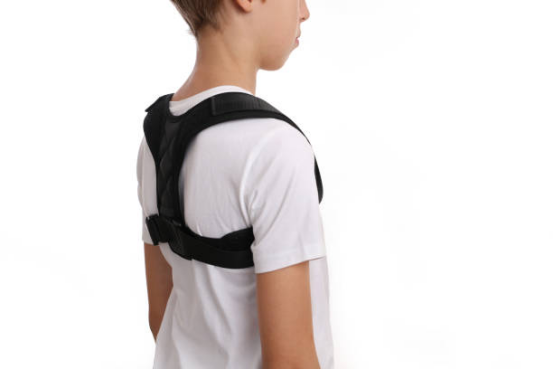
Intervention mechanisms of posture correctors for teens
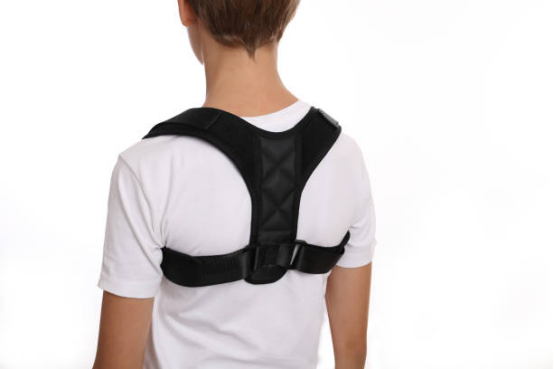
A posture corrector gently supports the shoulders, back, and thoracic spine, guiding teenagers to maintain proper scapular positioning and avoid rounded shoulders and forward head posture. Its core function is to provide postural feedback, allowing teenagers to unconsciously adjust their posture and thus establish healthy posture habits.
Posture correction and muscle activation
Using a posture corrector, the shoulder and back muscles gradually engage in support and extension, the thoracic spine receives mild traction, and the ribcage and thoracic cavity have increased mobility. This not only improves physical appearance but also brings the potential benefit of deeper breathing. Studies show that scapular stability and spinal extension help improve breathing efficiency, which is especially important for those who sit for long periods of time studying or using electronic devices.
Behavior and Habit Development
Teenagers’ behavioral patterns are highly malleable, and the posture habits established early in life can have a lifelong impact. Wearing a posture corrector is not mandatory but rather a daily posture reminder: it helps children keep their shoulders and back open during long periods of studying or playing, reducing the frequency of tech neck in youth while gradually internalizing good posture into a natural behavior.
Applications from a social and family perspective
Postural health is not just a personal issue but also a key concern for society and families. In family education, parents and guardians can use posture correctors as a tool for posture education, integrating them into the cultivation of daily habits. For example, when doing homework or using electronic devices, wearing a posture corrector lightly can help teenagers experience the comfort and improved concentration that comes with correct posture.
Intervention in educational settings
Schools can integrate posture education into daily health courses, combining posture correctors and simple posture exercises to guide students to pay attention to the natural extension of their shoulders, back, cervical spine, and chest. In the classroom environment, visual feedback from tech-neck youth (such as back rounding and forward shoulder tilt) can also help students more intuitively understand the severity of posture problems.
Cultivating Family Habits
Within the family, parental role modeling and environmental support are crucial. Posture correctors for teenagers can serve as a supplementary tool, working in conjunction with appropriate screen time management and rest activities to help teenagers maintain natural posture while using phones, tablets, or computers, gradually developing good posture habits. This intervention is gentle yet fosters consistent posture awareness in daily life.
Long-term value and psychological connection
Posture is not only related to physical health but also affects psychological and social experiences. Tech-neck youth not only cause muscle tension but may also affect self-confidence and mental resilience. Through interventions such as posture correctors for teens, teenagers experience physical comfort and mental relaxation in their daily lives, thereby improving their self-management skills and health awareness.
Maintaining good posture habits over the long term can alleviate neck and shoulder pain, improve breathing depth, and enhance self-image on both visual and social levels. This dual improvement in both physical and psychological well-being is especially important for growing teenagers.
The digital-age value of posture-correcting teens
In the digital age, the postural crisis among teenagers cannot be ignored. Head-forward posture, rounded shoulders, and spinal stiffness are not only physical problems but also potential threats to social and mental health. Posture corrector teens helps teenagers improve their “tech neck” and establish long-term, sustainable posture habits through gentle support and posture reminders.
For parents, educators, and adolescents themselves, understanding and using this tool, combined with daily habit cultivation and posture education, can create positive intervention effects in daily life. If you would like to learn more about scientific methods and practical guidelines for adolescent posture health, please browse our content here to obtain professional posture corrector usage strategies and educational advice, making posture health an important support for adolescent growth.