The Truth About Posture Correctors: Scientific Research and Expert Insights

Have you ever noticed that after long hours sitting in the office or looking down at your phone, your posture gets worse and worse? Aching back, slouching shoulders—it’s super annoying. So many people start using posture correctors available on the market, hoping to fix these problems. But at the end of the day, do these posture correctors really work? Are they reliable?
Today, we’ll uncover the truth using scientific studies and expert opinions!
What Is a Posture Corrector?
A posture corrector is a kind of assistive device designed to help you maintain proper body alignment. Usually worn on the back or shoulders with elastic bands, it gently restricts and reminds you not to slouch, hunch over, or let your shoulders roll forward. Think of it as an “invisible teacher” who constantly tells you, “Sit up straight, don’t slack off!”
What Does Science Say About Posture Correctors?
Many worry that posture correctors might make back muscles “lazy” and that long-term reliance could worsen things. Interestingly, science shows:
Short-term Posture Improvement
Studies indicate that wearing posture correctors can effectively remind people to adjust their posture and reduce slouching or forward shoulders in the short term. This is especially helpful for those who lack posture awareness.
Muscle Activation Support
Some well-designed correctors not only adjust posture but also activate back and core muscles, helping you sit straighter while strengthening relevant muscles.
Not a Magic Fix
Research stresses that relying solely on posture correctors cannot fundamentally solve posture problems. Proper posture requires exercise, lifestyle adjustments, and professional guidance.

What Do Experts Say?
Physical Therapists’ View
Most physical therapists see posture correctors as helpful short-term aids, especially during rehab or when breaking bad habits. However, they caution against long-term dependence since it can weaken muscles and harm health.
Chiropractors’ Advice
Chiropractors focus on overall posture and muscle balance. They consider correctors as just an aid—not a “cure-all.” Real solutions involve stretching, strengthening exercises, and improving the work environment (like adjusting desk and chair height).
Fitness Coaches’ Opinion
Coaches encourage strengthening core and back muscles through exercise to stabilize posture fundamentally. Correctors help raise posture awareness, but exercise is the real key long term.
How to Use Posture Correctors Correctly
Knowing that posture correctors can’t work alone, how can you maximize their effectiveness? Here are some tips:
Use as a Reminder, Build Good Habits
Start with short wearing times, like 30 minutes to an hour daily. It mainly reminds you, “Hey, don’t slouch, sit up!” Over time, your body will learn the feeling and maintain good posture even without it. Don’t rush to wear it all day—give your body time to adjust.
Don’t Forget Exercise
Correctors alone won’t cut it. Strengthen your muscles with back stretches and core exercises like planks and scapular squeezes. Strong muscles mean a more stable, upright posture and make the corrector’s job easier.
Comfort and Fit Matter
Choose the right size and adjustable materials. Don’t tie it too tight—it can be uncomfortable and restrict blood flow. Feeling comfortable means you can wear it longer and get better results.
Improve Your Environment
Posture depends a lot on your surroundings. Adjust your desk, chair height, and monitor position to cultivate good sitting habits. That way, your body gets better support and won’t have to rely entirely on the corrector.
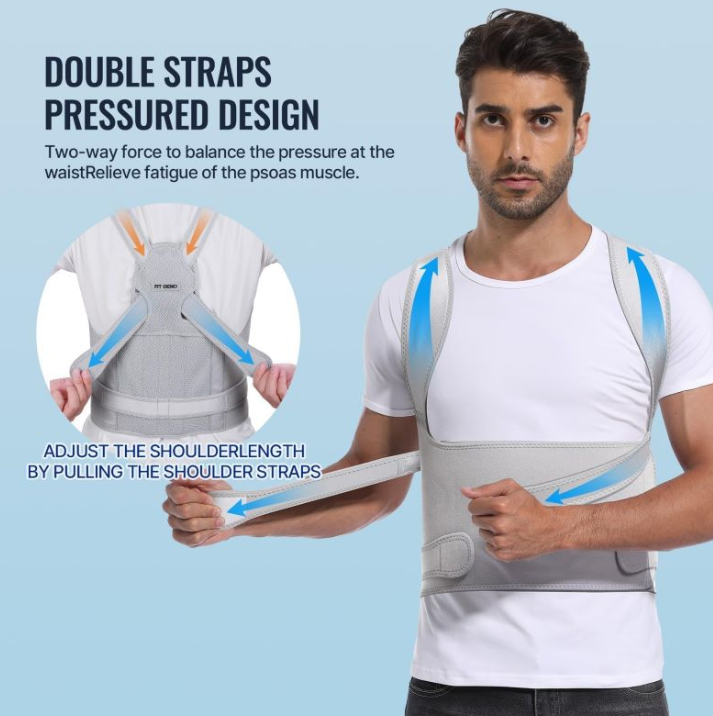
Who Are Posture Correctors Suitable For?
Office Workers
People who sit long hours at a computer, prone to looking down and slouching.
Those Recovering from Spine Injuries
Used under doctor supervision as part of rehab.
People with Poor Posture Awareness
Those who don’t naturally notice their posture can use correctors to increase awareness.
Note: People with serious spinal problems or sensitive skin should consult a doctor before use.
Summary: Are Posture Correctors Reliable?
Posture correctors do have a role, especially as a reminder tool to help break bad habits in the short term. But they’re not miracle solutions. To truly improve posture, exercise and lifestyle changes are essential.
Experts agree: treat posture correctors as helpers, not crutches. Combined with proper training and good sitting habits, you can achieve lasting results.
In the end, the real power to improve your posture lies within you!