When Data Begins to Understand Your Body: The Science Behind Posture Correctors

Sitting at your desk every day, have you noticed that your spine is slowly curving, your shoulders are slumping forward, and your back is starting to protest, but all of this is masked by your busy work?
Modern life has created a slight misalignment between our bodies and our will—you may feel like you’re standing very straight, but the data tells you that your posture has actually changed a bit.
This is where intelligent posture management comes in: it’s not just a “posture corrector,” but more like a tool that can communicate with your body. It tells you that even if you feel you’re standing straight, your back and neck may still be under stress. Through intelligent sensors and an adjustable design, it helps you understand the subtle signals your body is sending at every moment.
Why is intelligent posture management important?
You might think, “I can control myself by standing and sitting up straight, so I don’t need any equipment, right?#8221;
The problem is that the human body’s postural memory is not perfect, especially for people who sit for long periods of time.
Neck and shoulder fatigue: Looking down at a screen for long periods of time causes the shoulders to naturally tilt forward.
Spinal pressure: Poor posture increases the burden on the spine and can easily lead to lower back pain.
Breathing restriction: Bending over and tucking in the abdomen leads to a decrease in lung capacity, which has a long-term impact on energy levels.
The core of intelligent posture management is data-driven self-awareness:
Sensors monitor shoulder and back angles, reminding you to fine-tune your posture; adjustable braces distribute support pressure, allowing muscles to gradually memorize the correct position during correction.
In other words, it’s more than just an auxiliary tool; it’s a data-driven approach to training physical behavior.
Smart Orthodontics
Modern posture correctors are no longer rigid restraints but rather a combination of comfortable support and intelligent adjustment.
Shoulder support strap: soft and adjustable, ensuring the shoulders are naturally straight without squeezing the neck.
Back support sheet: conforms to the curve of the human body, gently stretches the spine, and reduces the pressure of sitting for a long time.
Adjustable tightness: Flexibly adjust the correction strength according to body shape and activity requirements.
Lightweight and breathable material: You won’t feel stuffy when you wear it for a long time, making you comfortable at work or at home.
This design not only helps you correct your posture but also helps you find a balance between comfort and efficiency.
Combined with a smart reminder system (such as posture data feedback connected to the app), your back health is like being “guarded” to reduce potential injuries.
How data “understands you”
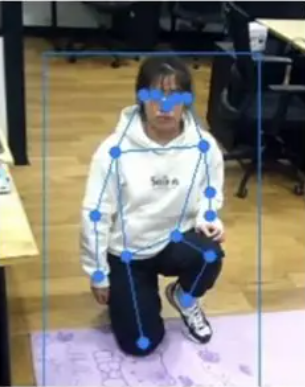
The core advantage of smart correctors lies in digitizing tiny signals hidden in the body.
Angle monitoring: If your shoulders and neck lean forward beyond the preset range, the corrector will provide slight feedback to remind you to adjust.
Time tracking: Record how long you maintain correct posture to help develop posture memory.
Muscle stress analysis: Prolonged contraction of muscles triggers reminders to avoid stiffness and soreness.
This data can be used to generate a visual report, letting you know how much time you actually spend standing straight each day. When is your posture most likely to slip?
In the past, you relied on your feelings to make corrections, but now you have data to prove it—your body doesn’t lie; it tells you its true state.
Everyday application scenarios: office, home, exercise
Smart posture management is not only for those who sit at their desks all the time but can also be used in our daily lives:
In the office, I remind you to do some light stretching of your shoulders and back every half hour to prevent your hunchback from getting worse.
You can wear it when you’re at home, reading or watching TV, maintaining a natural sitting posture without compromising comfort.
You can do some light exercise, such as core training or stretching. Using this posture corrector can help you maintain the correct back angle and make your training more effective.
This flexibility makes the braces not only a “correction tool” but also a good helper for our daily healthy lifestyle.
The dual influence of psychology and posture
Scientific research shows that posture not only affects physical health but also psychological state:
Stand tall and straight → Boost your confidence
Relaxing shoulders and back → Reduced anxiety
Standing stability → Enhanced concentration
When you maintain correct posture every day with the help of data and correctors, you’ll find that not only does your back feel more comfortable, but your mindset is also more stable.
This shows that posture management is not only a physiological issue but also a psychological adjustment tool.
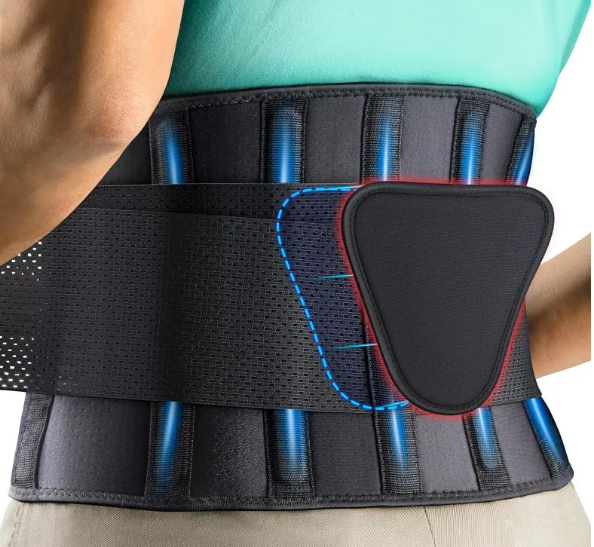
The adjustable posture corrector—comfortable back support—can prevent spinal deformation and correct your wrong posture by guiding the spine to return to its natural physiological curvature.
How to wear a posture corrector?
Many people worry that orthodontic appliances will be uncomfortable or even affect breathing or movement. In fact, wearing them correctly is crucial:
Shoulder strap adjustment: Put the shoulder strap on your shoulders and adjust the tightness according to your comfort level. Do not make it too tight to avoid strangling your neck, nor too loose to lose the support effect.
Back support: The back panel should fit snugly against the midline of the spine, with support evenly distributed from the shoulder blades to the waist, avoiding concentration on any one point.
Wearing time: For first-time users, it is recommended to wear for 30 minutes to 1 hour and gradually increase to 3 to 4 hours per day to allow the muscles to adapt.
Coordination: Orthotics cannot replace active muscle training. They can be combined with light stretching or core exercises to allow the body to actively exert force.
Clothing suggestion: You can wear it over a tight T-shirt or thin shirt to avoid heavy clothing affecting the correction effect.
Simply put, wearing a posture corrector is not about “the tighter, the better,” but about finding a balance between support and comfort so that the body can gradually remember the correct posture, rather than being forced into a distorted position.
Summary: A Data-Driven Posture Revolution
From “feeling straight” to “data-verified straightness,” intelligent posture management makes the body’s subtle signals visible and makes self-awareness quantifiable.
Adjustable posture correctors are not just support tools but also an extension of lifestyle: they help the body learn the correct posture, allow muscles to gradually memorize it, and even make the mental state more stable.
In the future, health will no longer be passively maintained but proactively managed through intelligence and data. Your body understands you better than you think—you just need to learn to understand its language.
Try this adjustable posture corrector—comfortable back support that lets data guide your posture, making it easy to establish a naturally upright posture.