Posture corrector solution for prolonged sitting during office meetings

The conference room was filled with the aroma of coffee and the clatter of keyboards, the blue light of screens reflecting softly on the tabletops. Just past the halfway point of the two-hour meeting, many people had already begun unconsciously rubbing their shoulders or stretching their arms. Maintaining a seated posture for extended periods not only causes fatigue but also harbors deep-seated muscle tension and postural imbalances. The emergence of posture correctors offers a scientific and sustainable body management solution for office workers who are constantly confined to meeting tables.
The Hidden Connection Between Posture and Back Tension
According to a report by the American Ergonomics Institute, sitting for more than 90 minutes continuously increases the tension of the neck and back muscles by about 23%. Repeatedly maintaining this posture over a long period can cause the scapula to shift downwards and the spine to tilt forward, thus inducing neck and shoulder pain or mild spinal deformities. Most people think it’s just “tiredness,” but it’s actually due to long-term overwork of the postural muscles.
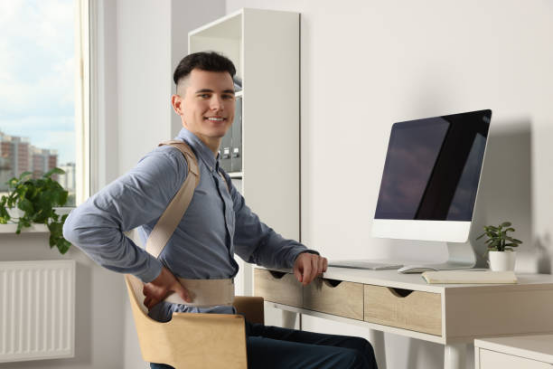
This is where the posture corrector comes into play—it doesn’t forcibly straighten the spine but rather uses gentle support and postural feedback to help the body become aware of the correct sitting posture. The flexible webbing helps open the shoulders and expand the chest, prompting the deep back muscles to naturally tighten, achieving an “active correction” effect. This passive reminder mechanism is more reliable than simply relying on willpower.
Different types of correctors support the body in different ways.
- The flexible structure emphasizes breathability and lightweight feel, making it suitable for all-day office wear.
- Rigid support provides stronger tensile feedback, making it suitable for intermittent posture adjustments;
- The combination of elastic materials balances the two, ensuring comfort even during summer meetings.
The material not only affects the corrective effect but also adherence. Studies show that 68% of long-term users prefer to continue wearing a more comfortable posture corrector rather than a more forceful version.
Scientific use of posture corrector methods
Many people give up on orthotics soon after purchasing them because they feel “uncomfortable” or “ineffective.” In fact, the correct way to use them is not simply “wearing them,” but rather integrating them with daily micro-movements.
- Adjust the tightness of the shoulder straps: the tightness should allow you to naturally lift your head and retract your shoulder blades. If it is too tight, it will restrict blood circulation.
- Take advantage of breaks in meetings to exercise: Perform 30-second shoulder rotations or neck stretches every 40 minutes to help activate deep stabilizing muscle groups.
- Combined with digital tools: Some users use posture reminder apps to record usage time and track posture improvement curves through data, which is especially effective in long meetings.
A small study conducted in Tokyo’s business district showed that when a posture corrector was used in conjunction with a reminder system, employees’ self-perception of posture accuracy improved by 42%. This digital integration transforms it from “passive wearing” into a proactive health management habit.
Maintenance and Long-Term Use Strategies
Any support device requires maintenance. Regularly cleaning the corrector’s webbing and checking its elasticity recovery are key to maintaining its support performance. It is recommended to hand wash with a mild detergent every two weeks and avoid direct sunlight to prevent fiber aging.
At the same time, don’t rely on the orthosis entirely. Its purpose is to rebuild muscle memory, not to replace the body’s natural force exertion. Ideally, wear it during long meetings or periods of focused work, and then perform light stretching afterward to allow the body to achieve a balance between support and relaxation.
Many companies’ occupational health consultants even recommend that employees use height-adjustable desks with posture correctors during afternoon meetings or long online communications to periodically change their posture and prevent the accumulation of static fatigue.
Real-life examples in the workplace
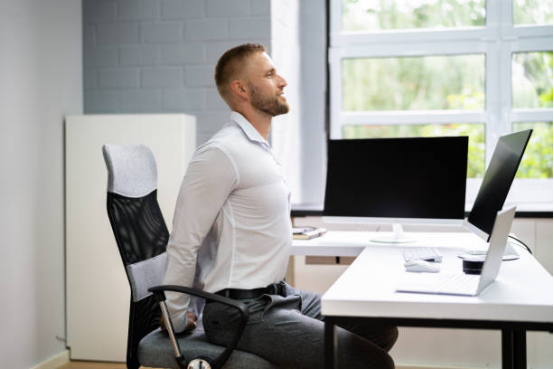
A Singapore-based financial company conducted a three-month internal trial in which 40 employees who spend long hours sitting were asked to use a posture corrector during meetings. The results showed a 37% decrease in average reports of neck and shoulder discomfort and an approximately 18% increase in attention span.
One project manager commented, “I no longer need to constantly think about ‘sitting up straight’; my body reminds me on its own.” This is precisely the core value of a posture corrector—helping the body develop postural awareness through physical feedback, rather than relying on external reminders.
Redefining comfort and focus in meetings
Healthy posture not only affects appearance and physique but also mental acuity and decision-making efficiency. Slightly opening the back, relaxing the chest, and breathing smoothly—these subtle physiological changes can significantly improve blood oxygen supply, allowing one to maintain focus during long meetings.
A posture corrector is no longer just a tool for self-correction but a “smart reminder system” for body management. Through its scientifically designed structure, it reduces fatigue in meeting rooms and makes sitting posture more conscious and effortless.