The complementary relationship between fitness and posture corrector

In contemporary fitness culture, there is a growing focus on balancing recovery and posture optimization. Many trainees, while striving to strengthen their muscle groups, neglect post-workout muscle relaxation and postural adjustment. This neglect often leads to muscle tension, stiff neck and shoulders, and even chronic pain. This is precisely why a posture corrector has become a crucial part of the fitness routine. It is no longer just an aid but a scientific strategy for helping the body regain its “fitness body alignment.”
Hidden fatigue after exercise: Muscle group “lock-in”
After completing high-intensity training, the body often enters a state of “inertial contraction.” In particular, the pectoralis major, trapezius, and core muscles have been continuously exerting force during weight training. If they are not relaxed in time, they will form a subtle tension memory. In this state, even when resting, your body may maintain a slightly arched posture—shoulders tilted forward and spine slightly curved.
This is why even if your training posture is correct, you may still feel “stiffer after training.” The importance of gym posture support in this situation cannot be overstated. Using a posture corrector after training can help relax muscle groups through gentle external support while reminding the body to maintain correct posture, allowing muscles to recover in relaxation rather than accumulating fatigue while tense.
Studies show that muscle fibers reach their peak repair phase within two hours after exercise. Wearing a post-workout posture corrector during this period can not only reduce muscle adhesions but also allow the nervous system to rebuild body balance more quickly, thereby optimizing overall recovery efficiency.
From “Strength Training” to “Posture Training”: A New Logic for the Recovery Phase
Fitness is not just about “exerting force” on the training field but also includes the process of restoring the body to coordination after training. Traditional training concepts emphasize muscle growth, but modern fitness is shifting towards “functional recovery”—that is, improving physical performance through posture management.
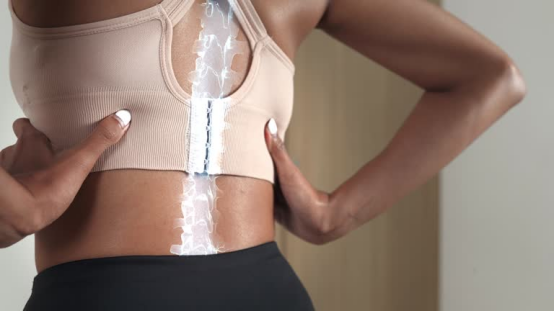
A posture corrector acts as a bridge in this logic. It’s not just a simple device to correct hunchback but a “movement assist system” that helps the body maintain natural alignment. Imagine that after completing a set of deadlifts or bench presses, your shoulders and back passively maintain proper alignment; this not only helps prevent the formation of incorrect muscle memory but also reduces the accumulation of fatigue.
From professional athletes to fitness beginners, more and more people are incorporating posture correctors into their post-workout phase.
- It can help the shoulder and neck muscles regain their natural extension.
- Stabilize the spinal structure and prevent deviations caused by uneven training intensity;
- Maintaining balance in a relaxed state reduces the risk of muscle soreness the next day.
Only when you understand the power of posture can you truly grasp the whole picture of fitness. Strength training shapes your physique, while posture management shapes your sense of movement. Combining the two leads to a double victory in both health and performance.
Scientific Perspective: The Relationship Between Body Alignment and Muscle Repair
In exercise physiology, there is an important concept called “neuromuscular reset.” This refers to the body’s need to rebuild the coordination between nerves and muscles through correct posture after exercise. This means that when you maintain poor posture after training, the brain incorrectly records the “muscle tension pattern,” causing you to maintain incorrect posture in daily life.
Fitness body alignment strategies are designed to address this issue. Through the gentle support of a posture corrector, the body receives stable external feedback, thereby actively adjusting neural signals and promoting muscle relaxation and blood circulation.
According to the American College of Sports Medicine (ACSM), individuals who maintain proper posture after exercise experience muscle repair rates approximately 25% faster than those who do not adjust their posture. This is a significant difference, especially for those who train frequently, as recovery speed directly impacts performance in the next training session.

Psychological relaxation: the connection between posture and emotion
Posture not only affects the body but also profoundly impacts emotions. When you maintain a tense posture after training, the brain mistakenly interprets it as a “defensive state,” leading to a persistent, mild sense of stress. A posture corrector works in the same way here—it helps you achieve a more relaxed and confident state of mind by adopting an “open” posture.
A study from University College London indicates that people who maintain good posture have significantly lower cortisol levels when faced with stressful tasks compared to those who slouch. In other words, posture not only shapes our appearance but also helps us maintain psychological balance on a subconscious level.
Therefore, using a posture corrector after a workout is not just part of muscle repair but also a process of simultaneous relaxation of both body and mind. This holistic coordination transforms recovery from a passive “wait-and-see” experience into an active restart.
The integration of posture corrector with smart fitness
With the widespread adoption of smart wearable devices, posture correctors are evolving from static correction tools into dynamic data systems. Future posture correctors may incorporate sensors and use AI to analyze changes in the user’s posture, adjusting support intensity in real time to provide personalized recovery plans for the body.
This trend means that “recovery” will no longer be a vague concept but a quantifiable and optimizable experience. Fitness will no longer be limited to training but will extend to multi-dimensional management of posture, breathing, and neural responses.
If you’d like to explore more solutions combining posture management and fitness recovery, please visit our website for more information. We continuously update practical insights and industry trends related to posture corrector technology to help you find your own “body balance rhythm.”
Rebuild posture, reshape strength
Fitness helps us understand muscle strength, while posture correctors help us understand the power of balance. They are not contradictory but rather complementary.
The next time you leave the gym, give your body a chance to “reset.” Relax your shoulders and neck, adjust your spine, and let every muscle return to its proper position. This is not just the end of your workout but the beginning of your body’s wisdom.
Every time you straighten up, you get closer to your true self.