Stop confusing yoga, Pilates, and posture correction: The real difference

In the midst of the fitness craze, you may be surrounded by various courses and training terms: yoga, Pilates, core training, posture correction… all seemingly capable of improving posture and straightening the back. However, when it comes to actually getting started, you often find yourself confused. What exactly are the differences between them? Does practicing yoga equate to posture correction? Or can posture correctors replace exercise?
Don’t worry, let’s break down the real differences between these three from a scientific and practical perspective and tell you how to combine them to help your body regain health and strength.
Yoga: Flow from Breath to Soul
The core of yoga is not just about stretching the body but also about connecting the body and mind .
Originating in India, it was originally designed to calm the mind before meditation, so each asana is actually designed to “calm the mind.”
Modern yoga emphasizes fluidity and flexibility, but regardless of style, the core principles are reliant on three key words: breathing, focus, and relaxation .
When you practice yoga, your muscles are gently stretched, your joints become flexible , and your breathing rhythm activates the parasympathetic nervous system, relaxing your body and calming your mind.
Suitable for those who sit for long periods of time, experience stress, or seek relaxation and flexibility improvement.
Experience: A sense of balance where the body flows and the mind is enveloped in tranquility.
Pilates: The aesthetics of power under precise control
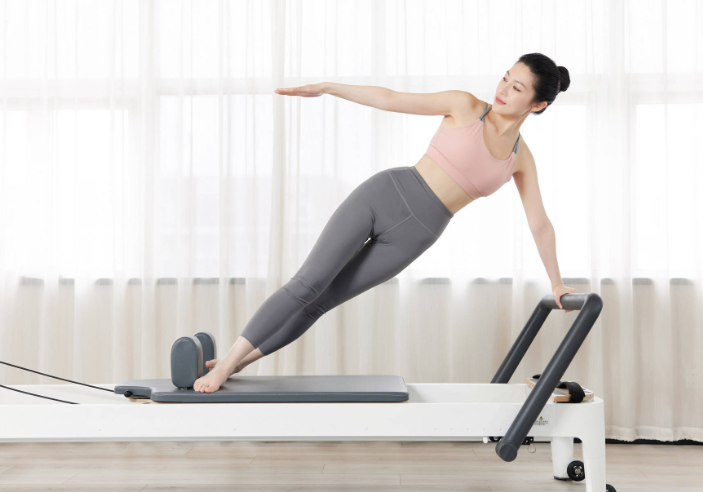
Although Pilates looks similar to yoga movements, its core goal is completely different—it is a training system aimed at strengthening the core and improving body control .
Originating in the early 20th century, it was designed by German artist Joseph Pilates as a rehabilitation exercise for injured patients .
Pilates emphasizes the coordination of breathing and muscle contraction, with a particular focus on activating your “deep core”—your transverse abdominal muscles, pelvic floor muscles, and back stabilizers.
When you are doing Pilates, each movement requires extremely high concentration and control.
It is not that the faster the better, but rather “the slower the harder”, and the more precise, the more effective.
Recommended for: Those who want to improve their posture, strengthen their core, and sculpt their body.
Experience: Muscles feel “awakened,” and the whole body feels firmer but not bulky.
Posture correction: let the body return to its proper track
While yoga and Pilates are training, posture correction is more like “tuning.”
It doesn’t focus on flexibility or strength but rather on restoring the body’s natural curves and symmetry through scientific methods .
Many people suffer from poor posture, not because they’re lazy, but because their bodies have “misremembered” their posture.
Spending long periods looking down at a phone, hunching over at work, and standing with a slanted posture can strain shoulder and neck muscles and cause bone displacement over time.
The goal of posture correction is to help you regain your “correct body memory.”
That’s where a posture corrector comes in handy.
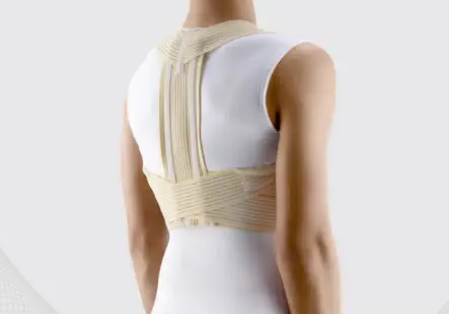
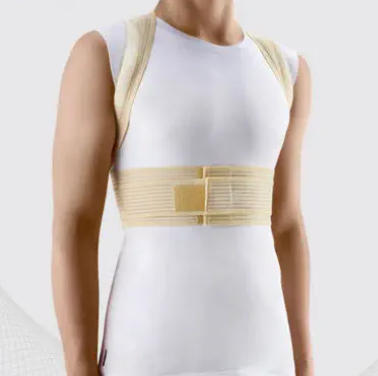
For example, the stand tall, feel light – the invisible corrector is practically invisible under clothing,yet it gently straightens your shoulders, reminding you to hold your head high and chest out, eliminating the hunchback.
It is not a forced “straightening” method but a gentle reminder to help the body restore balance in its natural state.
Suitable for: office workers who sit for long periods of time, those experiencing pain after exercise, and those recovering from childbirth.
Experience: A lighter body, a more upright posture, and smoother breathing.
The Real Difference Between Yoga, Pilates, and Posture Correction
| project | Yoga | Pilates | Posture Correction |
| origin | Ancient Indian spiritual philosophy | German rehabilitation training system | Modern sports rehabilitation theory |
| Core Goals | Balance body and mind, improve flexibility | Activate the core and control the body | Correct posture and restore balance |
| Breathing pattern | Deep nasal inhalation and exhalation | Rhythmic chest breathing | Natural breathing, function-oriented |
| Key areas | Full body stretch | Abdominal core | Skeletal and muscle chains |
| Effect direction | Peace of mind and flexibility | Power control and lines | Posture improvement and pain relief |
On the surface, they may overlap, but from the perspective of training logic:
Yoga is more like a “relaxation class” for the body and mind ;
Pilates is a “precision instrument” for controlling force ;
Posture correction is the body’s “reset button . “
How to Scientifically Combine: From Awareness to Habit
True postural change isn’t achieved through a single class or tool but through a dual approach of “awareness + habit.”
Here’s a suggested scientific approach:
Prepare with Yoga: 10 minutes of stretching daily to release stiffness in your shoulders, neck, and back. A more flexible body makes it easier to adjust to correct posture.
Strengthen with Pilates: Through transverse abdominis activation and pelvic control exercises, help your body learn to stabilize its midline.
Consolidate with a Posture Corrector: Wear a posture corrector in daily life, such as while working, using a computer, or walking, to continuously receive feedback signals.
This step is equivalent to extending classroom training into real life.
Self-Test Weekly: Take a side profile photo to see if your ear, shoulder, and hip are in a straight line. Record any changes in your posture; you’ll be surprised how much your body is truly “rebooting.”
Common questions about training methods (FAQ)
Q1: Can yoga and Pilates be used for posture correction?
A: Some exercises can improve posture, but they cannot replace systematic posture training. Posture problems usually require professional assessment and targeted solutions.
Q2: I have a stiff body. Where should I start?
A: I recommend starting with posture correction or Pilates. These are both more structured and more beginner-friendly.
Q3: Is it necessary to use equipment to learn Pilates?
A: Not necessarily. You can get significant results just by using a Pilates mat, and as long as you have precise control, you can also be very effective with your bare hands.
Q4: How often should I practice to be effective?
A: 2-3 times a week. After 4-6 weeks, you will notice that your body is straighter and lighter.
Q5 :Are posture correctors safe?
A: If you choose a breathable, lightweight, and elastic design, it’s generally safe and won’t compress muscles or affect blood circulation. However, be mindful of how long you wear it. Initially, we recommend the posture corrector for 1–2 hours per day to allow your body time to adapt.
Summary: The awakening of the body is the starting point of life
In this era where “smartphone addicts” and “sedentary lifestyles” coexist, learning to manage your body correctly is not just about health, but also a lifestyle.
Starting today, don’t blindly follow trendy courses; simply set clear goals—for relaxation, use yoga; for strengthening, use Pilates; for shaping, use a posture corrector.
Using Stand Tall, Feel Light—The Invisible Corrector might just be the starting point for your transformation.
It won’t change you, but it will accompany you on your journey, helping you become a better person step by step.