Synchronized Movements and Postures: Scientifically Activating Core Muscles with Posture Correctors

We often equate “core training” with abdominal muscle exercises, seemingly believing that simply doing enough sit-ups will make our bodies more stable and upright. However, true core strength actually comes from deeper muscle groups—the “invisible guardians” that support your spine, shoulders, neck, and pelvis.
In this era of prolonged sitting and looking down, these muscle groups are “dormant.” Fortunately, a good posture corrector can help you reawaken them.
Why are core muscles important?
The core muscles include the abdomen, waist, buttocks, and deep back muscles, which are the “support center” of the body.
Support the spine: Good core strength can reduce pressure on the spine and prevent shoulder and neck pain.
Stabilizes the body: Core stability helps maintain balance during exercise or prolonged sitting, reducing the risk of injury.
Improve efficiency: With stronger core strength, body movements are more coordinated, and exercise efficiency is higher.
The core is not just the abdominal muscles, the real strength comes from the collaboration of the deeper muscles.
The connection between common posture problems and core weakness
Many people think that hunchback is just a matter of habit, but in fact it is often caused by insufficient core muscle strength.
Shoulders hunched forward: chest tightness and weakness in the deep back muscles.
Abnormal spinal curvature: sitting for long periods of time causes increased pressure on the lumbar spine.
Back pain: The core is unstable, and the burden falls on the back muscles.
Solving posture problems requires more than just posture correctors; it also requires scientific core training.
The benefits of synchronizing core training with postural correction
When you wear a lightweight, unnoticeable posture corrector while working your core , the effect is twofold :
Real-time reminder: The corrector gently supports your back, allowing you to maintain correct posture during exercise.
Strengthen memory : When the core muscles move in the correct posture, muscle memory is more effective.
High safety : Avoid straining the shoulders, neck, or waist due to incorrect movements.
Simply put, braces + core training = “building muscles + developing habits.”
Core training example (10-15 minutes per day)
1. Plank
Movement: Keep your body straight and your elbows on the ground.
Target: Abdomen, waist, and deep back muscles.
Recommendation: Beginners should start from 20 seconds and gradually increase to 1 minute.
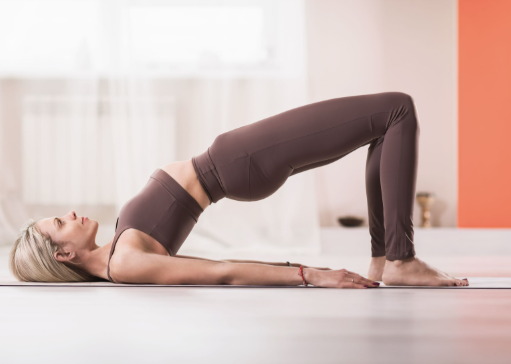
2. Bridge Pose
Action: Lie on your back and lift your hips until your shoulders, knees, and feet form a straight line.
Targets: Hips and lower back core muscles.
3. Side Plank
Action: Lie on your side, support your body with one hand, and keep it straight.
Targets: External obliques, shoulder stability.
4. Butterfly Stretch + Core Contraction
Action: Sit with your feet together, tighten your core, and slowly lean forward.
Goal: To stretch the hips while activating the deep core muscles.
Tip: Performing these exercises while wearing a posture corrector will increase the effect of posture memory without restricting free movement.
Seamlessly integrate posture corrector exercises into your daily life
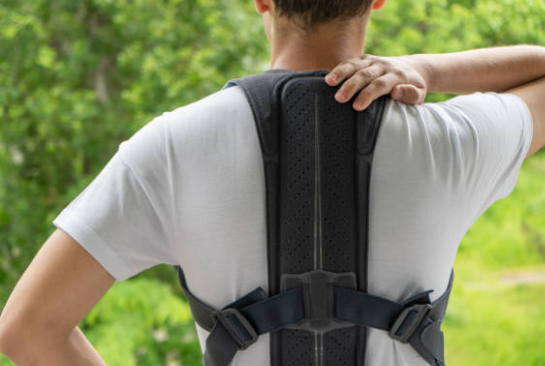
Using a good corrector is lightweight, effective, undetectable—the posture corrector you’ll actually wear , allowing you to quietly improve your posture in your life:
Office : When sitting in front of a computer for a long time, the brace gently supports your back.
Commuting : Keep your shoulders and back naturally stretched while riding the subway or driving.
At home : remind you to stand up straight when reading or doing housework.
Exercise : Used to help maintain correct posture during core training or yoga.
The key point is “seamless wearing.” It is not a restraint but a reminder, allowing you to maintain a good posture in any scenario.
Frequently asked questions ?
Q1: Can a posture corrector really improve hunchback?
A: The corrector itself provides support and a reminder, but long-term effects depend on core muscle training and daily habits . It can make it easier to maintain correct posture, but it is not a complete replacement for exercise.
Q2:How long to wear a posture corrector?
A: We recommend using it for 1-2 hours a day initially and then gradually increasing the time. Do not wear it continuously for long periods of time to avoid muscle dependence.
Q3: Can I wear it while exercising?
A: Yes. Choose a lightweight style that doesn’t interfere with your movements. It’s most effective when you’re doing core training or stretching.
Q4: Will the brace make the body stiff?
A: No. Modern designs emphasize comfort and mobility, providing gentle support to help muscles remember the correct posture.
Summarize
Core strength and postural stability are closely linked . Synchronizing exercise and correction not only helps you maintain an upright posture but also reduces stress on your shoulders, neck, and back, making daily life easier.
Core training with orthotics (like lightweight, effective, undetectable – the posture corrector you’ll actually wear) allows muscle memory and daily posture habits to develop simultaneously.
If you stick to it, you will find that straightening your back not only changes your body but also improves your confidence and comfort.