When your body becomes a dashboard, use a posture corrector to understand your state

Have you ever experienced stiff shoulders and neck or back pain after sitting for long periods, even without exercise? This isn’t about “getting old,” but rather your posture sending a warning signal. Your body is like a sophisticated dashboard; every subtle signal is telling you that your posture is incorrect and needs adjustment, but you’ve ignored it.
Using a posture corrector, you can monitor your sitting posture and spinal condition in real time, scientifically correcting hunchbacks and restoring balance and ease to your body. Learn to understand the language of posture, starting with spinal management.
Posture is actually the body’s “voice assistant.”
You may not notice that every movement—sitting, standing, walking, bending—is conveying information.
However, this information is not expressed in words but through “muscle pull,” “shoulder line tilt,” and “cervical flexion.”
Posture is the most honest language of the body:
When you hunch your shoulders for too long, your body is actually saying, “I’m tired.”
When you look down at your phone for more than 15 minutes, your cervical spine will send out a signal that “I’m about to suffocate.”
When your shoulders are asymmetrical, your back sends this signal: “I’m paying the price for your daily habits.”
What is most easily overlooked is the chain reaction brought about by this “imbalance”—from headaches and eye fatigue to anxiety and decreased concentration, all of which may be “chain reactions” of posture.
In other words, your body already has an alarm system, you just don’t know it.
Posture is defining your sense of state
In the age of the camera, posture is no longer just a matter of health; it’s become a social gesture .
A straight back conveys confidence, relaxed shoulders convey composure.
Psychological research has found that “posture not only affects how others see you but also how you see yourself.”
When you hold your head up and chest out, your brain secretes more dopamine, making you feel more positive;
But when you lower your head and hunch your back for a long time, your brain automatically enters “defense mode”, leading to decreased attention and low mood.
This also explains why more and more people are starting to pay attention to their posture when working, exercising, or even commuting.
It’s not for the sake of appearance, but to regain a sense of control .
It is in this context that modern posture correctors have become gentle and intelligent “assistants” – unlike traditional braces, they are lightweight and fit closely, allowing the body to naturally restore its ideal lines rather than being forced to correct them.
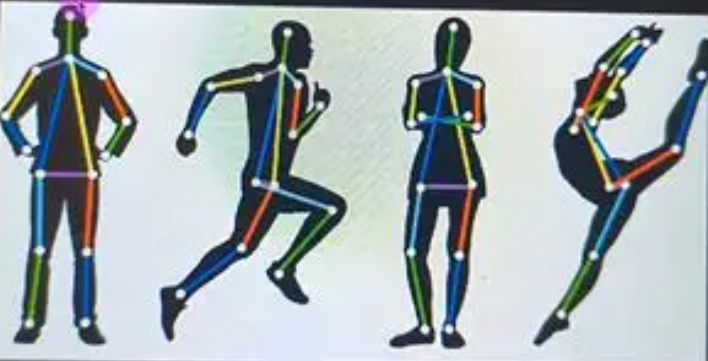
Modern people’s posture dilemma: sitting for long periods of time, looking down, and screen anxiety
Our lifestyle is causing our body to become “unbalanced”.
Sitting for long periods of time at work : Back muscles gradually weaken and core support disappears;
Using a mobile phone for a long time : the cervical spine is compressed and the head is tilted forward;
High-stress environment : chronically tense shoulders and shallow, rapid breathing.
These habits form a kind of “posture inertia,” just like a car’s steering wheel is slightly off but no one fixes it. Over time, the tires will wear out.
The worst part is that our brains become accustomed to the wrong posture , so even when you relax, your body isn’t in the right position.
This is why many people say, “I’m so tired of standing straight” or “I feel sore when I relax”—because the body has long forgotten what the correct “neutral posture” is.
A lightweight, wearable posture corrector is like installing an “automatic calibration system” next to your body: it does not pull hard, but through gentle support and reminders, it allows you to gradually return to a natural, upright state.
What can we read from posture?
You might be surprised to learn that your posture can reveal not only your health but also your mental state.
① Hunched chest: Indicates chronic stress or defensiveness.
② Hunched back: Indicates fatigue and lack of energy.
③ Holding your head high and chest out but stiff: This could be an overexertion into maintaining a “perfect” image.
④ Shoulders hunched forward: A typical sign of prolonged computer work.
⑤ One side higher than the other: Indicates an unstable center of gravity and a potential tendency for the spine to tilt.
If you spend a minute every day looking in the mirror and looking at your shoulders, neck, and back contours, you will find that your body is actually always “talking” – you just have to give it a chance to be listened to.
Posture awareness is the starting point of health.
Posture awareness exercises: getting your body back online
To learn how to understand your body, the most important thing is to bring it “online”—to return to your perception of your body.
The following simple exercises can help you reestablish a sense of dialogue between your body and posture:
① Check your posture every hour:
Sit up straight, put your feet flat on the ground, lower your shoulders naturally, and take three deep breaths.
② “Wall alignment method”:
Stand against a wall with the back of your head, shoulder blades, and buttocks lightly touching the wall—this is the natural midline of your body.
③ Micro-sensory exercise:
Close your eyes and feel whether your body weight is evenly distributed on your feet . This exercise can make you realize the “center of gravity” of your body again.
And if you want a more continuous reminder, a lightweight, effective, undetectable – the posture corrector you’ll actually wear can become your “external consciousness” – it is like a small coach, silently supporting you behind the scenes, without interfering or restraining you, and only gently reminding you when you need it.
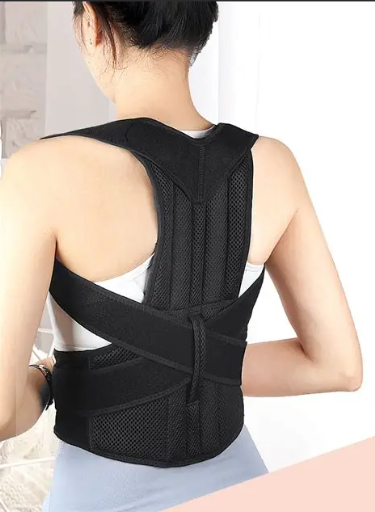
The key to correction: not being forced, but being “awakened”
Many people have misunderstandings about “posture correction,” thinking it simply means “straightening the body,” and even worry that the corrector will make them dependent.
But in fact, truly effective posture correction is a kind of body education:
it helps you to rediscover the correct body structure, and when you realize the feeling of “alignment,” you can maintain it naturally even without wearing anything.
The lightweight, invisible, and breathable braces on the market are based on this concept: they don’t correct you but rather remind you to be aware of it.
After wearing them for a long time, your muscles will automatically “remember” the correct posture, just like riding a bike or typing, forming muscle memory.
This is the real gentle and lasting change.
Are posture correctors worth it?
This question really depends on what kind of change you’re looking for.
If you expect to “straighten instantly” after wearing it once, that’s obviously unrealistic. But if you want a gentle, continuous reminder system in your daily life ,a posture corrector is a very worthwhile investment.
Today’s designs are incredibly lightweight, invisible, and comfortable to wear while working, in meetings, or even walking.
They’re not medical devices, but lifestyle modulators : they help you gradually cultivate body awareness and improve your posture. In the long run, this is more effective than any massage or short-term treatment .
Because the best posture is not something that others help you adjust, but something that you “remember” yourself.
Summary: Understanding the body is a kind of life wisdom
When we learn to read the language of posture, we actually learn how to communicate with our bodies.
Stand straight, not for appearance, but to allow energy to flow freely through your body .
When you regain your center of gravity, the world will stabilize.
You don’t have to be perfectly aligned every day, as long as you are willing to start listening, your body will give you the most gentle response.
Perhaps, starting today, all you need is a lightweight, effective, undetectable – the posture corrector you’ll actually wear to help your body slowly find its own “center line” during your daily work, study, or rest.
Because the true posture is not corrected but perceived, understood, and awakened.